Arrival of People in Texas


Students brainstorm what they can learn from looking at artifacts. Then they examine two theories of how people first arrived in North America. Next they take a closer look at artifacts found in Texas and they explain what historians might learn from them. Finally they compare and contrast two indigenous creation stories—one from a sedentary group and one from a nomadic group.

This learning experience is designed for device-enabled classrooms. The teacher guides the lesson, and students use embedded resources, social media skills, and critical thinking skills to actively participate. To get access to a free version of the complete lesson, sign up for an exploros account.

1:1 Devices
Teacher Pack

The Pack contains associated resources for the learning experience, typically in the form of articles and videos. There is a teacher Pack (with only teacher information) and a student Pack (which contains only student information). As a teacher, you can toggle between both to see everything.

Here are the teacher pack items for Arrival of People in Texas:

Preview - Scene 1
Exploros Learnign Experience Scene Navigation


Overview

In this experience, students brainstorm what they can learn from looking at artifacts. Then they examine two theories of how people first arrived in North America. Next they take a closer look at artifacts found in Texas and they explain what historians might learn from them. Finally they compare and contrast two indigenous creation stories—one from a sedentary group and one from a nomadic group.

If you have access to leveled readers containing other indigenous folktales, assign them to the students in parallel to this experience.

Estimated duration: 45-55 minutes


Discovery Reading

A printable Discovery Reading is included in the student pack as a support for understanding the experience’s core content and concepts. This Discovery Reading is not necessary to complete the experience and serves as an optional support resource.

Vocabulary Words:

These vocabulary words are used in the experience or connect closely to the standards and content students examine. Students should understand these terms as they work through the experience.

  • artifact: an object made or used by people in the past that helps historians learn about how they lived.
  • archaeologist: a scientist who studies people from long ago by examining artifacts and other evidence they left behind.
  • theory: an idea or explanation based on evidence that helps explain the past.
  • Beringia: a land bridge that once connected Asia and North America during the Ice Age.
  • Indigenous: the first people of a place; in this lesson, the Native peoples who lived in what is now Texas and North America.
  • sedentary: living mostly in one place instead of moving around, often in villages.
  • nomadic: moving from place to place instead of staying in one settlement all year.
 

Objectives

  • Describe theories of when and how the first people arrived in what is now Texas.
  • Explain how historians learn about ancient people.


Engage


So far in this unit you have learned mainly about the physical geography of the regions of Texas. When and how did people first arrive? In this lesson, you will learn how historians try to answer that question.

Objectives
  • Describe theories of when and how the first people arrived in what is now Texas.
  • Explain how historians learn about ancient people.


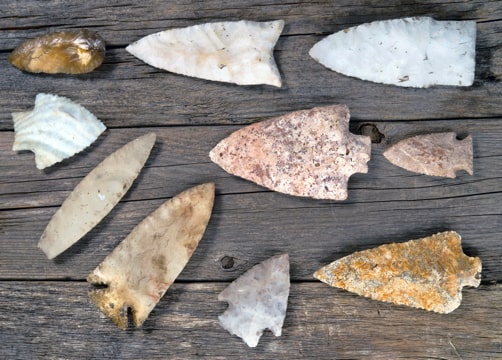
Photograph of arrowheads of different sizes and shapes

Indigenous artifacts found in east Texas


Look at the Indigenous artifacts shown in the photograph above. What is something that you can learn about the Indigenous people of what is now Texas from these items?



Accept any answers to get students engaged. They will take a closer look at artifacts from the Lower Pecos Canyons in scene 3.

When everyone is ready to continue, unlock the next scene.

End of Preview
The Complete List of Learning Experiences in Texas Geography and Its Indigenous People Unit.
Would you like to preview the rest of this learning experience, and get access to the entire functioning Texas Studies course for your classroom? Sign up using your school email address below.
Back to top