Add a Curriculum Bundle to Your Account!
Please select a bundle.





The Pack contains associated resources for the learning experience, typically in the form of articles and videos. There is a teacher Pack (with only teacher information) and a student Pack (which contains only student information). As a teacher, you can toggle between both to see everything.
Here are the teacher pack items for Central America and the Caribbean: Society and Culture:


Overview In this experience, students explore society and culture in Central America and the Caribbean through music, food, and other cultural traditions. They examine how cultural expressions reflect influences from Indigenous peoples, Africans and their descendants, European colonization, migration, and local traditions. Students then research one cultural expression in a country or territory from the region and create a cultural profile explaining what it reveals about that society. Finally, they reflect on patterns and differences in culture across Central America and the Caribbean. Objectives:
Culture can be expressed through music, food, language, religion, celebrations, art, clothing, and other traditions. Across Central America and the Caribbean, these cultural practices have developed from many influences and can vary widely from one country, island, or community to another.
Music is one important example. Styles such as reggae, calypso, merengue, zouk, ska, and others developed in different parts of the Caribbean and reflect the histories and traditions of the people who created them.
In this experience, you will explore music and other aspects of society and culture in Central America and the Caribbean and examine how they reflect the people and histories of the region.
Objectives:
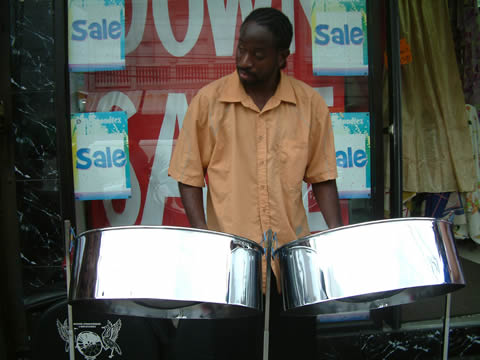
A Steelpan Player in Trinidad and Tobago
Music is one way culture is expressed in the Caribbean. Steelpan music developed in Trinidad and Tobago and became an important part of Caribbean musical tradition.
Watch Steel Drums. As you watch, pay attention to the instruments, sounds, and performance style. Think about what this example can show you about music as an expression of Caribbean culture.
What did you notice about the steelpan music that helps explain why music can be an important part of Caribbean culture?
Discuss student responses. For example, some students may be impressed that the drums used for steel drumming are actually old oil drums. Invite students to describe anything they already know about Caribbean music. If some students have some background, encourage them to share what they know.
When everyone is ready to continue, unlock the next scene.


