Add a Curriculum Bundle to Your Account!
Please select a bundle.



The Pack contains associated resources for the learning experience, typically in the form of articles and videos. There is a teacher Pack (with only teacher information) and a student Pack (which contains only student information). As a teacher, you can toggle between both to see everything.
Here are the teacher pack items for South Asia: Geographic Passport:

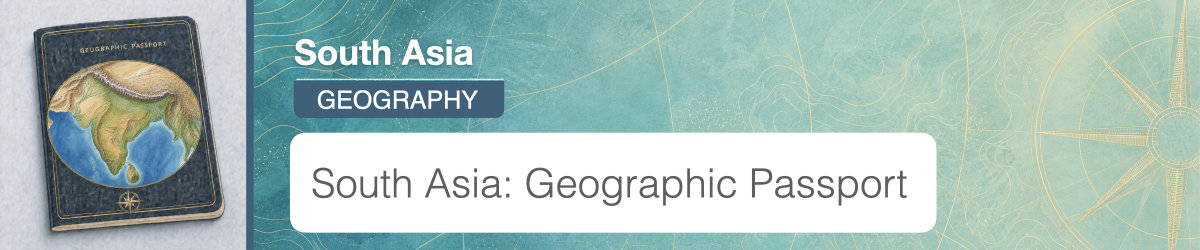
Overview: In this experience, Students investigate the physical geography of South Asia using Exploration World to compare terrain, climate, rivers, cities, and population patterns. They examine how landforms and climate help shape where people live, then read about the region’s major physical features and population distribution. Finally, students explore Nepal and Mount Everest as a case study of how extreme geography can create both opportunities and challenges for people. Objectives:
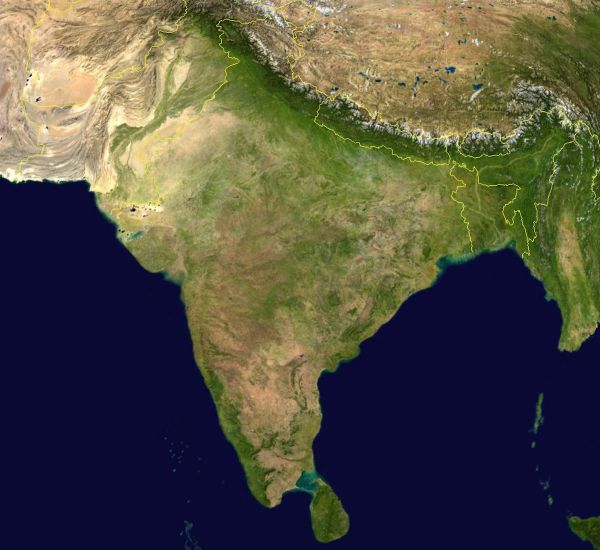
South Asia includes some of the world's highest mountains, broad river plains, high plateaus, long coastlines, and islands. Climate also varies greatly across the region, from cold mountain environments to hot, wet tropical areas and much drier places.
These physical differences matter because geography affects the environments in which people live. Mountains, rivers, flat land, rainfall, and access to water can influence farming, transportation, settlement, and the growth of cities.
Throughout this experience, you will use interactive maps to investigate these relationships rather than simply memorize a list of geographic features.
In this experience, you will examine the physical geography of South Asia, investigate patterns in where people live, and use Nepal and Mount Everest as a case study of how geography can create both opportunities and challenges.
Objectives:
South Asia
Which physical feature do you predict will have the greatest influence on where people live in South Asia?
After students respond, review several of the predictions without identifying one as correct. Use the discussion to establish that students are making hypotheses they will test with geographic evidence. Students may identify mountains, rivers, plains, coastlines, rainfall, or climate. Explain that no single feature determines where people live, but physical features often help explain population patterns. Possible follow-up questions include:
When everyone is ready to continue, unlock the next scene.


