Add a Curriculum Bundle to Your Account!
Please select a bundle.



The Pack contains associated resources for the learning experience, typically in the form of articles and videos. There is a teacher Pack (with only teacher information) and a student Pack (which contains only student information). As a teacher, you can toggle between both to see everything.
Here are the teacher pack items for South Asia: History and Its Influence:

Overview: In this experience, students trace major periods in South Asian history from early civilizations through independence and Partition. They examine how trade, migration, empires, colonial rule, and resistance shaped the region over time, then research one historical period in greater depth and share their findings. Finally, students analyze photographs from Partition to explain how major political events can affect communities and everyday life. In scene 3, students will work in small groups, each assigned a different history topic. Divide them into at least eight groups to cover all the topics. Objectives:
Places are shaped by more than what is happening there today. Cities, borders, languages, religions, buildings, political systems, and relationships among groups can all reflect events that happened hundreds or even thousands of years earlier.
South Asia has experienced many periods of major change. Early civilizations developed along rivers and trade routes. Powerful kingdoms and empires rose and fell. Muslim rulers established states across parts of the region, European trading companies gained political power, and Britain eventually controlled most of the Indian subcontinent. During the twentieth century, movements for independence challenged British rule, and the end of colonial rule led to the creation of India and Pakistan.
These periods did not simply replace one another. Each left influences that became part of later societies.
In this experience, you will trace major periods in South Asian history and examine how migration, trade, empire, colonialism, independence, and partition influenced the region over time.
Objectives:
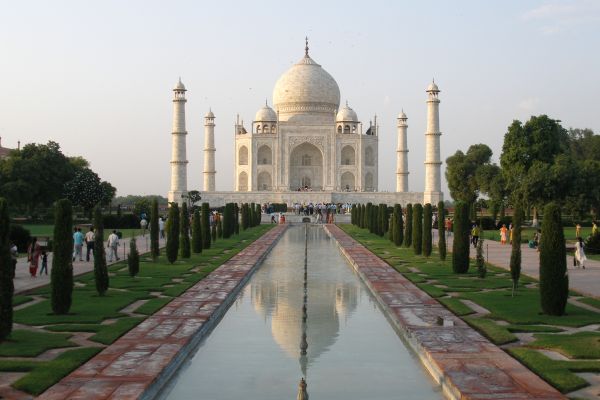
The Taj Mahal
What is one way an event from the past can continue to influence a place today?
After students respond, invite several students to explain the connection between the past event and its later influence. Use the discussion to introduce the idea that historical influence can appear in many forms, including borders, government institutions, religions, languages, architecture, trade relationships, and cultural practices. Explain that students will trace several major periods of South Asian history and look for these kinds of connections. Possible follow-up questions include:
When everyone is ready to continue, unlock the next scene.


