Add a Curriculum Bundle to Your Account!
Please select a bundle.


The Pack contains associated resources for the learning experience, typically in the form of articles and videos. There is a teacher Pack (with only teacher information) and a student Pack (which contains only student information). As a teacher, you can toggle between both to see everything.
Here are the teacher pack items for Changing Demographics in Texas:


Overview In this experience, students consider where people move to Texas from. Then students learn about some of the results of the 2020 U.S. Census relating to Texas. Next they learn some of the uses of the Census data, and they analyze what information they would use to plan a bilingual educational program. Finally they research a cultural or ethnic group in Texas and write a report. Students will collaborate in small groups for scene 3 and scene 4. Estimated duration: 45-75 minutes, depending on how much time you want to give students for the group informational text writing assignment in scene 4. You may also have each group give an oral presentation based on its research. Discovery Reading A printable Discovery Reading is included in the student pack as a support for understanding the experience’s core content and concepts. This Discovery Reading is not necessary to complete the experience and serves as an optional support resource. Vocabulary Words: These vocabulary words are used in the experience or connect closely to the standards and content students examine. Students should understand these terms as they work through the experience. Objectives
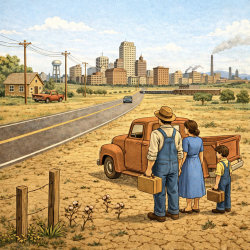
The population of Texas is changing in many ways. Some of these changes are due to immigration from other countries and others are due to migration of people coming from other parts of the United States. In this lesson you will learn about changes in the Texas population and the contributions of different ethnic groups.
Objectives

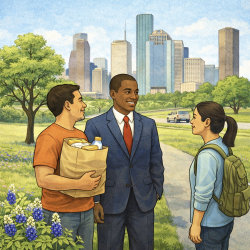
Demographics are the things that describe a population, such as age, income, and ethnicity. Some of the biggest changes facing modern Texas are related to its shifting demographics. Texas is home to people whose families came from many different places. Some families moved from other states, and some came from other countries. These many backgrounds are part of what makes Texas diverse.
Name one or more states or countries that families in Texas may have come from before living in Texas.
You may use examples from your community, from people you know, or from what you have learned.
To list more than one place, separate them with a comma.
Do not require students to share private family history. Keep the discussion focused on the many places families in Texas may come from. Students may use examples from their community, from people they know, or from general knowledge. Avoid asking “Are there any surprises?” or “How many generations has your family been in Texas?” Instead ask: