Add a Curriculum Bundle to Your Account!
Please select a bundle.


The Pack contains associated resources for the learning experience, typically in the form of articles and videos. There is a teacher Pack (with only teacher information) and a student Pack (which contains only student information). As a teacher, you can toggle between both to see everything.
Here are the teacher pack items for Russia and the Republics: Geographic Passport:

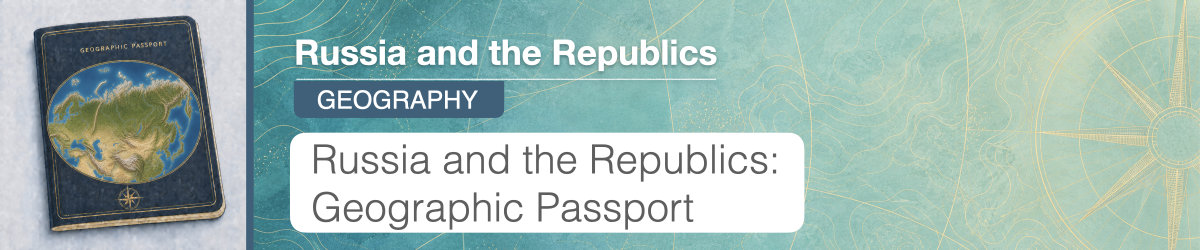
Overview In this experience, students explore the physical geography of Russia by examining its size, location, landforms, climate, natural resources, and population patterns. They create a geographic passport and use maps to identify connections among population density, climate zones, and landforms. Finally, students create a poster that explains Russia’s climates, landforms, and natural resources for a younger audience. In scene 3, students will work in small groups on one of two different tasks. Objectives:
Russia stretches across eastern Europe and northern Asia and is the largest country in the world by area. Its enormous size includes a wide range of physical environments, from broad plains and mountain ranges to forests, tundra, major rivers, and long coastlines.
Because Russia extends across such a large part of the Northern Hemisphere, its climate, vegetation, population patterns, and transportation challenges vary greatly from one region to another. Physical geography has also influenced where people live, how they travel, and where economic activities develop.
In this experience, you will examine Russia’s major landforms, bodies of water, climate regions, and other physical features and consider how geography influences patterns of life across the country.
Objectives:
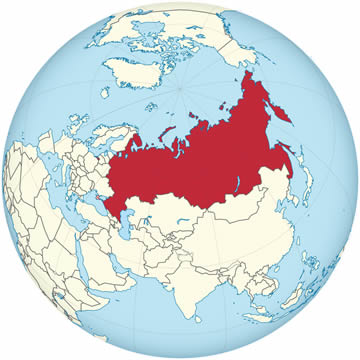
Russia is the largest country in the world by area. What geographic challenges might a country this large face?
Invite students to share the geographic challenges they predicted and ask them to explain the reasoning behind each idea. Record several responses and group similar ideas together, such as distance, transportation, climate, settlement, communication, or access to resources. Emphasize that students are making predictions at this point, not identifying confirmed facts about Russia. Tell them they will use maps and geographic information throughout the lesson to test and refine these ideas. Possible follow-up questions include:
When everyone is ready to continue, unlock the next scene.


