Add a Curriculum Bundle to Your Account!
Please select a bundle.


The Pack contains associated resources for the learning experience, typically in the form of articles and videos. There is a teacher Pack (with only teacher information) and a student Pack (which contains only student information). As a teacher, you can toggle between both to see everything.
Here are the teacher pack items for Russia and the Republics: Government and Economy:

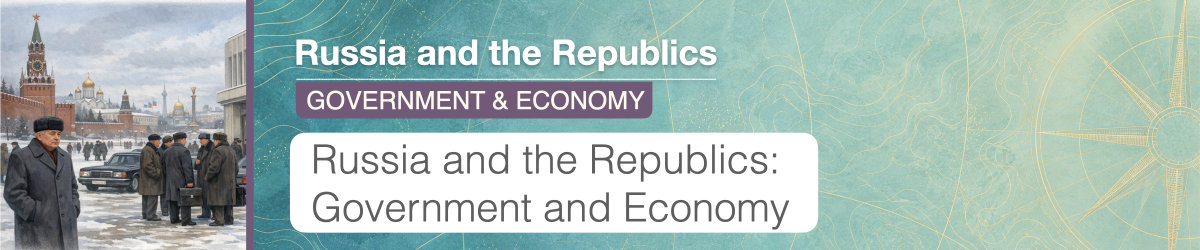
Overview In this experience, students examine the fall of the Soviet Union and the political and economic changes that followed. They trace key events leading to the Soviet Union’s collapse in 1991, then study Vladimir Putin’s rise to power and the changes that occurred in Russia under his leadership. Finally, students investigate the government and economy of one former Soviet republic and compare patterns of political and economic development across the countries that emerged after the Soviet Union dissolved. Students will collaborate in small groups for scene 4. You will assign each small group one of the 15 countries that make up the Russian Federation: Belarus, Ukraine, Georgia, Azerbaijan, Lithuania, Latvia, Estonia, Moldova, Russia, Kazakhstan, Kyrgyzstan, Uzbekistan, Turkmenistan, Armenia, or Tajikistan for further research. Objectives:
For most of the 1900s, Russia was the largest and most powerful republic within the Soviet Union. The Soviet Union was made up of 15 republics that were governed through a communist political system with major decision-making power concentrated in Moscow.
The Soviet government also controlled much of the economy. Instead of allowing most businesses and individuals to make their own production and pricing decisions, the state directed major industries, set economic goals, and controlled many resources.
By the 1980s, the Soviet Union was facing serious political and economic problems. Efforts to reform the system increased public debate and weakened central control. In 1991, the Soviet Union dissolved, and its 15 republics became independent countries.
The collapse created major changes across the region. New governments had to decide how political power would be organized, while many countries also began moving away from centrally planned economies toward systems with more private ownership and market activity.
In this experience, you will examine why the Soviet Union collapsed and how that collapse changed government and economic life in Russia and the other former Soviet republics.
Objectives:
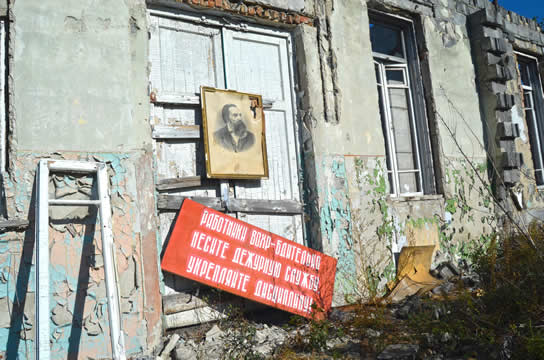
Abandoned Communist-era Factory, Ukraine
Watch the video to hear a song about the Fall of the Soviet Union. Be sure to watch the graphics, as well!
Use the following table to record three facts about the government and/or economy of Russia and the Republics you learned from the video.

As a class, discuss what facts students learned. Ask them what questions they have about those facts. Establish these questions as guiding questions for the rest of the experience.
When everyone is ready to continue, unlock the next scene.


