Add a Curriculum Bundle to Your Account!
Please select a bundle.


The Pack contains associated resources for the learning experience, typically in the form of articles and videos. There is a teacher Pack (with only teacher information) and a student Pack (which contains only student information). As a teacher, you can toggle between both to see everything.
Here are the teacher pack items for A Lack of Freedom in Today’s World:


Overview In this experience, students look at a map to see the areas of the world that are considered “not free.” Then they learn about some of the ways that “not free” governments function. They explore the way that the North Korean government controls its citizens. Next, they individually research another “not free” country and report back to the group. Finally, students write about the freedoms they believe are most important. Estimated duration: 45-60 minutes Vocabulary Words: Objective:
How many times in your life have you said, “Wait, that’s not fair!” People often want to speak up when they disagree with a rule, decision, or idea. In some countries, laws strongly protect people’s ability to express disagreement and criticize the government. In others, those freedoms are more limited.
Why do people have different levels of freedom to speak, protest, or challenge government decisions in different countries? You’ll explore that question in this experience.
Objective:
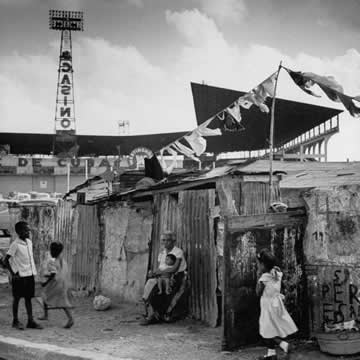
Slum in Havana, Cuba in 1954
People around the world do not all experience the same freedoms in their daily lives or in their relationship with government. In some places, people have more freedom to speak, organize, vote, or challenge leaders than in others.
To begin, go to Freedom in the World and look at the map on the screen.
What do you notice about the map?

Discuss student findings. Students will likely notice that much of Africa and Asia is purple, which means it is “not free.” Most of North America is “free.” The United States, where students live, is free. Some parts of the world are “partly free.” They may wonder what that means. Ask students if they are surprised by what they see on the map. Some students will be surprised to realize how much of the world is categorized as “not free.”
What do you think “not free” means?
Discuss student responses.
In the rest of this experience, you will learn more about what a “Not Free” rating means and explore how limits on political rights and civil liberties can affect people living in these countries.
When everyone is ready to continue, unlock the next scene.


