Add a Curriculum Bundle to Your Account!
Please select a bundle.


The Pack contains associated resources for the learning experience, typically in the form of articles and videos. There is a teacher Pack (with only teacher information) and a student Pack (which contains only student information). As a teacher, you can toggle between both to see everything.
Here are the teacher pack items for Brazil: Geographic Passport:


Overview In this experience, students are introduced to the physical geography of Brazil. They learn about four landscape types in the country. Then they focus on what the Amazon rainforest is, why it’s important, how it is threatened, and what possible solutions are. Finally, students research and explain the threats to the coastlines and beaches of Brazil. Objectives:
Brazil is the largest country in South America and one of the most biodiverse countries in the world. Its geography includes the Amazon rainforest, major river systems, grasslands, wetlands, highlands, and a long Atlantic coastline.
These physical features help shape Brazil’s climate, natural resources, ecosystems, and patterns of human activity. They also contribute to environmental challenges in different parts of the country.
In this experience, you will examine Brazil’s major physical features, natural resources, ecosystems, and environmental challenges to better understand how geography shapes the country.
Objectives:
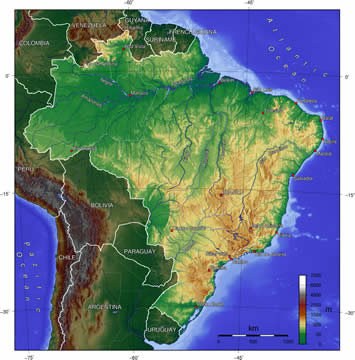
Based on the four landscapes, what can you infer about Brazil’s physical geography? Use evidence from at least two of the landscapes to support your answer.
Answers will vary. Students might note that the country’s landscape is varied. They may recognize that there appears to be access to a lot of water in the photos. As a group, try to come up with a definition for the four landscape types without looking anything up: Explain that students will learn more about them in the next scene.
When everyone is ready to continue, unlock the next scene.


