Add a Curriculum Bundle to Your Account!
Please select a bundle.



The Pack contains associated resources for the learning experience, typically in the form of articles and videos. There is a teacher Pack (with only teacher information) and a student Pack (which contains only student information). As a teacher, you can toggle between both to see everything.
Here are the teacher pack items for Brazil: Government and Economy:


Overview In this experience, students examine Brazil’s government and economy, beginning with the role of coffee as an important agricultural product and export. They identify major features of Brazil’s political system, industries, resources, and economic activities. Students then investigate Brazil’s sugarcane-based ethanol industry and explain how it connects agriculture, energy production, the economy, and the environment. Finally, they use evidence to explain how one natural resource can have both economic and environmental effects. Objectives:
Brazil has one of the largest economies in Latin America, with major industries that include agriculture, mining, manufacturing, energy, services, and trade. It is also the world’s largest producer of coffee, making coffee one well-known example of how Brazil’s natural resources and climate support economic activity.
Brazil is also a federal republic with elected leaders at the national, state, and local levels. Government decisions can influence trade, business, public services, natural resources, and other parts of the economy.
In this experience, you will examine how Brazil’s government is organized and explore the major activities, resources, and industries that shape its economy.
Objectives:
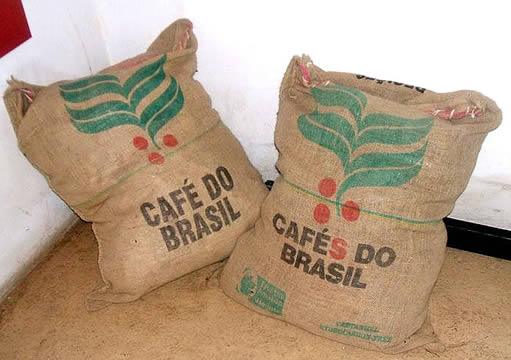
Bags of Brazilian Coffee
Coffee is one of Brazil’s best-known agricultural products and has played an important role in the country’s economy for generations. Brazil’s climate, land, labor, transportation networks, and international trade all help make large-scale coffee production possible.
Watch the video about Brazil’s coffee industry. As you watch, pay attention to how coffee moves from farms to markets and to the different people, jobs, and economic activities involved along the way.
How does Brazil’s coffee industry show the connection between agriculture, jobs, trade, and the wider economy? Use examples from the video to support your response.
Discuss student responses and guide students to identify the different parts of the coffee economy shown in the video. Students may mention farming, harvesting, processing, transportation, sales, exports, and the jobs connected to each stage. Emphasize that coffee is not just an agricultural product. It connects farms to businesses, workers, transportation systems, and international trade. Use the discussion to help students see how one product can be part of a much larger economy.
When everyone is ready to continue, unlock the next scene.


