Add a Curriculum Bundle to Your Account!
Please select a bundle.


The Pack contains associated resources for the learning experience, typically in the form of articles and videos. There is a teacher Pack (with only teacher information) and a student Pack (which contains only student information). As a teacher, you can toggle between both to see everything.
Here are the teacher pack items for Southern Coastal South America: History and Its Influence:


Overview In this experience, students explore the Inca Empire by first examining Machu Picchu and considering what the site reveals about Inca engineering, daily life, and adaptation to the Andes. They then learn about the organization, achievements, and expansion of the Inca Empire and the factors that contributed to Spanish conquest. Next, students compare the different meanings that gold held for the Inca and for Spanish conquistadors. Finally, they reflect on the questions historians and archaeologists still have about Machu Picchu and the kinds of evidence that can help explain the past. Objectives:
Long before European colonization, Indigenous peoples developed complex societies throughout the western coast and Andes of South America. One of the largest was the Inca Empire, which grew to include parts of present-day Peru, Chile, Bolivia, Ecuador, Argentina, and Colombia.
The Inca built roads, organized governments, developed farming systems suited to different environments, and connected millions of people across a vast territory. Their empire was later transformed by Spanish conquest and colonization, but Indigenous peoples and traditions continued to shape the region.
In this experience, you will explore the rise of the Inca Empire, Spanish conquest and colonial rule, and the ways these histories influenced southern coastal South America.
Objectives:
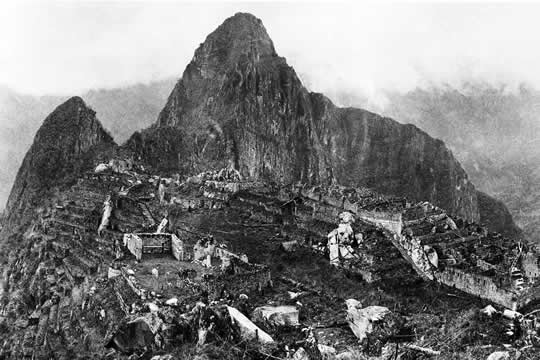
Imagine that archaeologists uncover a previously unknown ancient city in the Andes. What kinds of evidence would help you understand how the people who lived there organized their society and adapted to their environment?
Discuss student responses as a class or encourage them to share with an elbow partner and then share out to the class.
When everyone is ready to continue, unlock the next scene.


