Texas development during Reconstruction and the expansion of the frontiers, the cattle industry and railroads, immigrant communities, and the Texas government
Reconstruction and Frontiers unit contains 11 learning experiences.
Learning Experiences (Lessons) in Reconstruction and Frontiers Each learning experience takes about 45 minutes to teach in the device-enabled classroom.
Reconstruction in Texas
Students take a poll of problems that arose in Texas during Reconstruction. Then they watch a video about Reconstruction and examine the Reconstruction Amendments. Next they learn about Radical Reconstruction and predict how Texans felt about the United States taking a role in Texas state politics. Finally they analyze a political cartoon of a carpetbagger.
African American Rights During Reconstruction
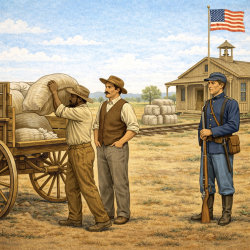
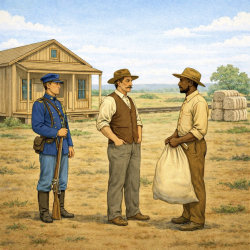
Students brainstorm what challenges people might face when they become free. Then they learn about issues facing freed African Americans, including sharecropping and education. Next they examine the rise of the Ku Klux Klan and Black Codes, and they explain how these were forms of extreme violence. Finally they read about some of the early African American politicians in Texas.
Westward Expansion in Texas and Indigenous Nations
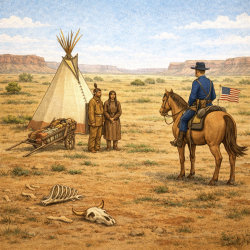
Students begin by creating a class What We Know chart about indigenous people of Texas. Next they learn about the role of the forts on the Texas frontier, and they compare maps from pre-and post-Civil War. Then they read about the Red River Wars and the effort to relocate indigenous people onto reservations. They explain the impact of commercial buffalo hunting on the indigenous people in the plains. Finally they write about how westward expansion impacted the choices indigenous people had to make.
The Texas Constitution
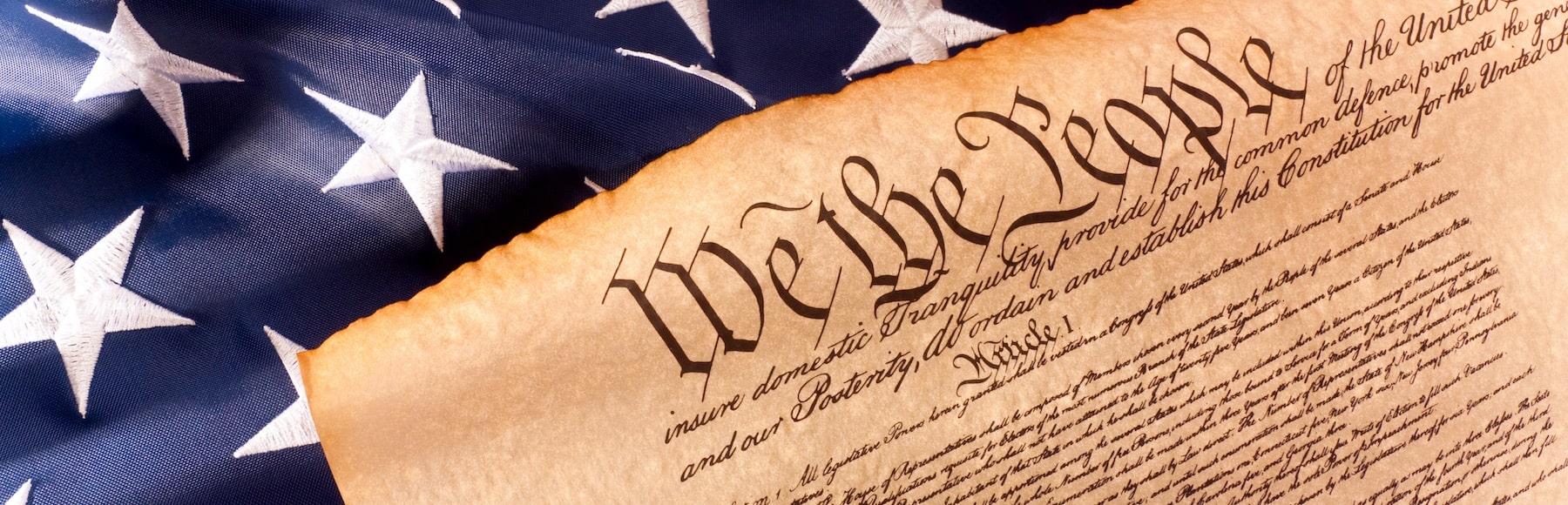
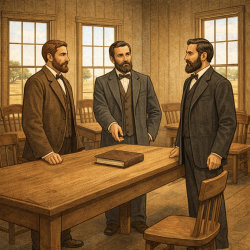
Students view the first page of the Texas Constitution of 1876 and make observations about it. Then they review the seven principles of the U.S. and Texas Constitutions. Next they examine some of the rights in the Texas Bill of Rights, and they explain the importance of one of those rights. Finally they choose an Article or Amendment and paraphrase it.
Structure of the Texas State Government
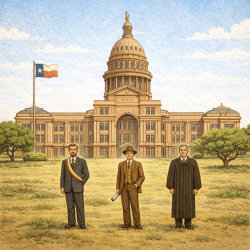
Students first use the internet to locate the names of their state senator and representative. The next three scenes present the three branches of state government, and the small groups create charts of each branch. Finally each small group creates a poster about one of the three branches.
Cattle in Texas
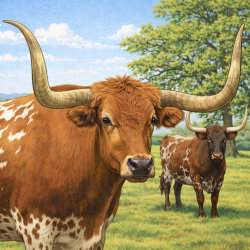
Students brainstorm their associations with the word “cow." Then they read about the history of cattle in Texas. Next they learn about barbed wire and windmills, and they analyze how ranching affected the environment. Finally they read the lyrics to the song “The Farmer and the Cowman,” and they explain the conflict between these two populations.
Life on the Trail: Cattle Drives
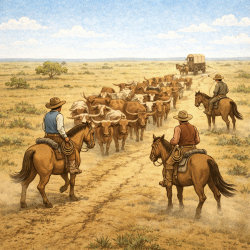
Students brainstorm ways to bring beef to buyers in the nineteenth century. Then they learn about cattle drives, focusing on the Chisholm Trail and the Goodnight-Loving Trail. Next they learn about life on the trails, and they explain the causes that led to the end of the cattle drives. Finally they examine a timeline of the development of the King Ranch.
Railroads in Texas
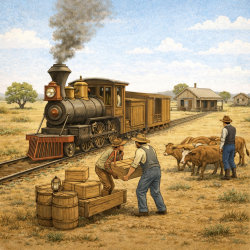
Students consider inventions and what they think the greatest invention of all time is. Then they learn how Texas benefitted from the arrival of the railroads and create a chart of three effects of rail line expansion across the state. Next they learn about boomtowns and cities that grew along the tracks. Finally they analyze how the railroads affected wildlife, especially the buffalo, and how that affected some indigenous people.
The Texas Agricultural Economy
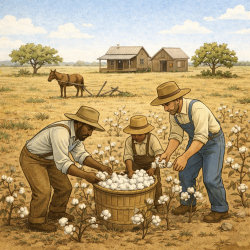
Students first brainstorm the purpose of an unidentified farm machine (cotton compressor). Then they learn about the rise of commercial farming in Texas. Next they examine basic economic concepts, such as supply, demand, and competition, and apply them to commercial farming in Texas. Finally they read about modern agriculture in Texas and create a map of agricultural activity.