Add a Curriculum Bundle to Your Account!
Please select a bundle.


The Pack contains associated resources for the learning experience, typically in the form of articles and videos. There is a teacher Pack (with only teacher information) and a student Pack (which contains only student information). As a teacher, you can toggle between both to see everything.
Here are the teacher pack items for Southern and Eastern Africa: History and Its Influence, Part 2:


Overview In this experience, students examine how European colonial rule continued to influence Eastern and Southern African societies after independence. They compare different paths from colonial rule to self-government, including the longer struggle for majority political rights in parts of Southern Africa. Students then investigate conflicts in Uganda, Rwanda, and Sudan and South Sudan to analyze how colonial legacies interacted with political decisions, economic pressures, and other post-independence developments. Finally, students use evidence from across the experience to explain how colonialism shaped later conditions without determining every outcome. Although this experience stands alone, it works best with Southern and Eastern Africa: History and Influence, Part 1, which explores the history of these regions from earliest times up into the time of colonialism. In Scene 3, students will work together in small groups. Objectives:
Political independence is a major turning point, but gaining independence does not erase the systems that existed before it. New governments may inherit borders, laws, economic relationships, government institutions, and inequalities created under an earlier system.
That challenge was especially important in Eastern and Southern Africa. Colonial governments had created political boundaries and institutions without giving most African people equal political power. In some places, colonial policies also gave certain groups greater access to education, government positions, land, or economic opportunities than others.
When colonial rule ended, people across the region had to make decisions about how new nations would govern, build economies, and create political systems that represented their populations. Different countries responded in different ways.
In this experience, you will examine how countries in Eastern and Southern Africa moved from colonial rule to independence and analyze how colonial structures, national leadership, Cold War pressures, and decisions made after independence influenced what happened next.
Objectives:
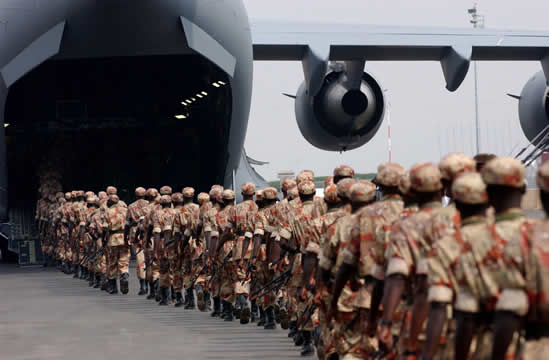
Rwandan Soldiers on Way to Darfur, Sudan
Imagine that people outside your community had controlled its government for many years. They created the boundaries, chose many of the rules, decided who could participate in government, and organized much of the economy around their own interests.
Now that outside government is leaving. The people in your community will govern themselves, but the borders, institutions, economic system, and many of the old rules still exist.
What would be one important challenge for a new government taking control under these conditions?
After students respond, invite several students to explain the challenge they identified and the evidence from the scenario that shaped their thinking. Use the discussion to establish that independence gives people political control over their own country, but governments do not begin with a blank slate. They inherit institutions, economic relationships, borders, and social conditions from the past. Emphasize that these conditions can influence later choices without determining what will happen. Possible follow-up questions include:
When everyone is ready to continue, unlock the next scene.


