Add a Curriculum Bundle to Your Account!
Please select a bundle.



The Pack contains associated resources for the learning experience, typically in the form of articles and videos. There is a teacher Pack (with only teacher information) and a student Pack (which contains only student information). As a teacher, you can toggle between both to see everything.
Here are the teacher pack items for Sub-Saharan Africa: Water as a Natural Resource:

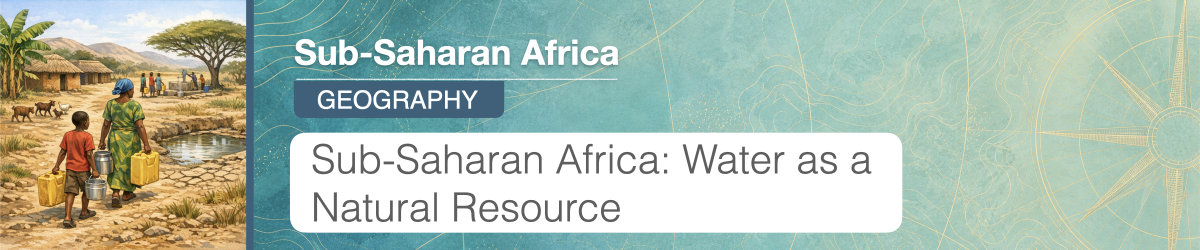
Overview In this experience, students examine water as a natural resource in sub-Saharan Africa and investigate why having water nearby does not always mean people have reliable access to safe water. They explore how rainfall, drought, pollution, infrastructure, and technology can affect water access, then consider how communities and governments can respond to different water challenges. Finally, students use evidence from the experience to explain why water problems require different solutions depending on their causes. There is not a traditional exit ticket assessment at the end of this experience. Instead students are given the opportunity to practice more sustained writing. Objectives
Water is one of Earth’s most important natural resources. People need it for drinking, preparing food, sanitation, farming, raising animals, industry, and producing energy. Yet having water somewhere in a country does not mean that everyone can easily use it.
Water resources are not distributed evenly across sub-Saharan Africa. Some places receive heavy rainfall and contain large rivers, lakes, or groundwater supplies. Other places have long dry seasons or receive much less rainfall. The amount of available water can also change from year to year.
Access depends on more than the amount of water in the environment. Water must be safe to use, and people need ways to collect, treat, store, and move it. Wells, pumps, pipes, treatment systems, reservoirs, and other infrastructure can make water easier and safer to access. Pollution, damaged systems, long distances, or a lack of infrastructure can make access more difficult even when water exists nearby.
This means there are several different kinds of water challenges. A drought can reduce the amount of water available. Pollution can make available water unsafe. A community may also have water underground or nearby but lack the equipment or systems needed to bring it safely to homes and businesses.
In this experience, you will investigate why access to safe water differs across sub-Saharan Africa and examine how geography, technology, human choices, and government decisions can affect this essential resource.
Objectives
What is one factor that could make it difficult for people to get safe water, even if water exists nearby? Respond in one word or a two-word phrase. To list more than one, separate them with a comma, like this: dance, sing.
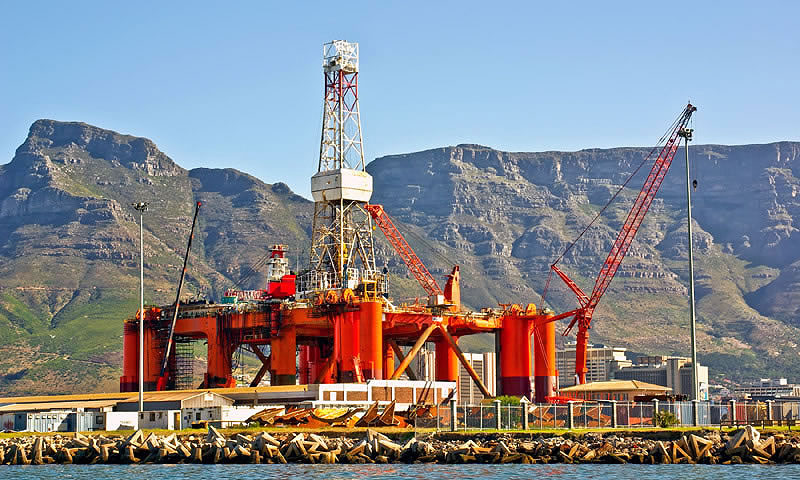
After students respond, invite several students to explain how the factor they identified could affect access to water. Use the discussion to distinguish between water availability and water access. Students may identify drought, distance, pollution, broken pumps, lack of pipes, cost, population growth, or other factors. Reinforce that a water problem does not always mean there is literally no water in the environment. Possible follow-up questions include:
When everyone is ready to continue, unlock the next scene.


