Add a Curriculum Bundle to Your Account!
Please select a bundle.




The Pack contains associated resources for the learning experience, typically in the form of articles and videos. There is a teacher Pack (with only teacher information) and a student Pack (which contains only student information). As a teacher, you can toggle between both to see everything.
Here are the teacher pack items for Sources of the Texas Revolution:


Overview In this experience, students examine growing tensions between some Anglo-American settlers and the Mexican government and summarize the complaints expressed in the Turtle Bayou Resolutions. Next, they examine why some settlers came to oppose President Santa Anna’s shift toward a stronger central government. Finally, students evaluate the role of the United States and private Americans in supporting or influencing the Texas Revolution. Students learned about three events that contributed to the Texas Revolution— the Fredonia Rebellion, the Mier y Terán Report, and the Law of April 6, 1830—in the experience The Mexican Government Asserts Control over Anglo Texas. Objectives:
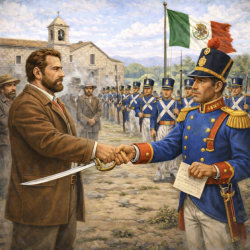
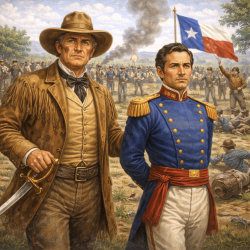
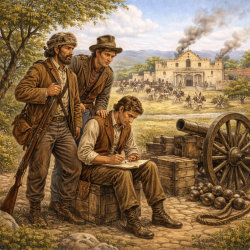
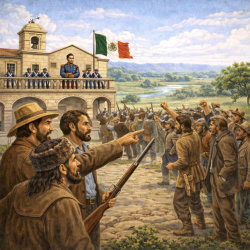
The Texas Revolution did not begin because of a single event. During the 1820s and 1830s, disagreements grew between some people in Texas and the Mexican government over laws, political power, immigration, slavery, and how Texas should be governed.
In this lesson, you will examine several events and ideas that contributed to these growing tensions and helped lead to the Texas Revolution.
Objectives:

Trinity River and Anahuac Area
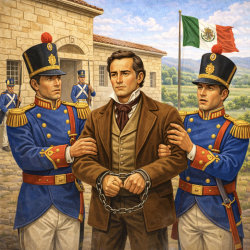
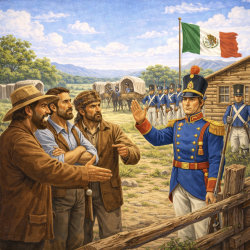
In 1830, the Mexican government began enforcing the Law of April 6, 1830, which restricted further immigration from the United States and strengthened Mexican authority in Texas. Mexican officials established military posts and customs stations to enforce immigration and trade laws. These actions increased tensions with some Anglo-American settlers who opposed the new restrictions.
Later that year, Mexican troops established a post near the mouth of the Trinity River, where the river meets Galveston Bay. Ships and other travelers could enter the area through the bay and move inland along the river. Because of this location, Mexican officials could watch an important route into Texas, collect customs duties, and enforce immigration laws.
The post became known as Anahuac. Its location and purpose made it an important center of Mexican authority in the region, but it also became a place where conflicts developed between Mexican officials and some settlers.
Use the information in the reading to create a simple diagram showing why Anahuac was an important location. Include:

Have students review each other’s posts.
When everyone is ready to continue, unlock the next scene.