Add a Curriculum Bundle to Your Account!
Please select a bundle.



The Pack contains associated resources for the learning experience, typically in the form of articles and videos. There is a teacher Pack (with only teacher information) and a student Pack (which contains only student information). As a teacher, you can toggle between both to see everything.
Here are the teacher pack items for The Mexican Government Asserts Control over Anglo Texas:


Overview In this experience, students learn about the Mexican Constitution of 1824. They describe three events that were precursors to the Texas Revolution—the Fredonia Rebellion, the Mier y Terán Report, and the Law of April 6, 1830. They identify how these events led to the Mexican government’s fear of a rebellion and the Anglos’ frustration with the government. Students will collaborate in small groups for scene 2 and scene 3. Objectives:
Mexico gained independence from Spain in 1821 after more than a decade of conflict. Independence brought major changes to the new nation, including decisions about how Mexico would govern its large territory and strengthen its northern regions.
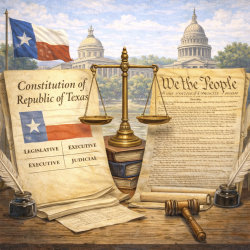
Mexican leaders encouraged settlement in Texas as one way to increase population, develop the economy, and strengthen control of the region. Colonization laws allowed empresarios to recruit families and establish colonies. In 1824, Mexico also adopted a new constitution that created a federal republic and divided power between the national government and the states. Texas became part of the state of Coahuila y Tejas.
At first, many Anglo-American settlers supported Mexico's federal system. Over time, however, disagreements developed over how Texas should be governed and how Mexican laws should be enforced.
In this lesson, you will examine why the Mexican government became increasingly concerned about conditions in Texas and the actions it took to strengthen its control of the region.
Objectives:

Based on the map, what can you conclude about the relationship between U.S. territory and Mexican territory in 1824?

Answers may vary.
Divide students into their small groups for the next two scenes. When everyone is ready to continue, unlock the next scene.