Add a Curriculum Bundle to Your Account!
Please select a bundle.

The Pack contains associated resources for the learning experience, typically in the form of articles and videos. There is a teacher Pack (with only teacher information) and a student Pack (which contains only student information). As a teacher, you can toggle between both to see everything.
Here are the teacher pack items for Indigenous People of the Southeast:

Overview In this experience, students investigate how the Cherokee, Chickasaw, Choctaw, Creek, and Seminole Nations lived in the Southeast and how they made decisions about their futures. First, they examine an introduction to these nations to understand their homelands, food, houses, and cultural traditions. Next, students read more about daily life to see how these nations were established and connected. Then, students research governance, land and treaties, adaptation and resistance, and cultural preservation, and present their findings in a slideshow. Finally, the Elaborate scene invites students to share their slideshows in a forum format and respond to questions from their classmates. Estimated Duration: 75–90 minutes Vocabulary Words and Definitions: Objectives:
This experience has no optional scenes so that students can explore, research, present, and reflect. Skipping the Elaborate scene would eliminate the class forum, which is a key part of the experience. The class forum allows students to learn about all the Indigenous nations the class researched and ask questions of one another.
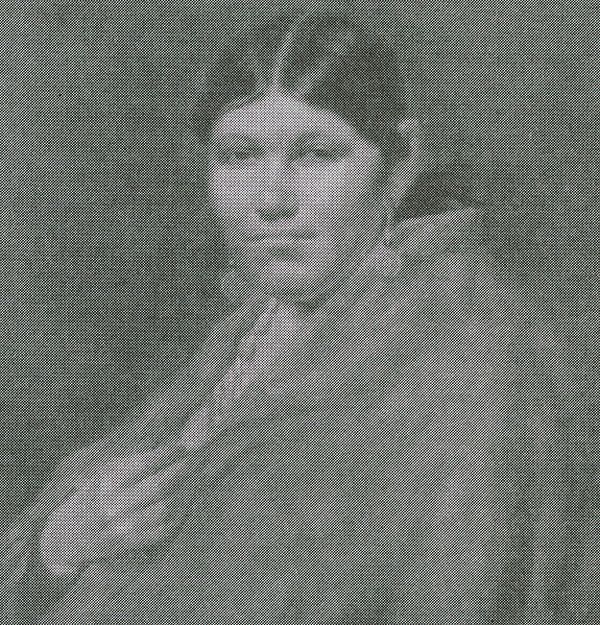
Portrait of a Cherokee woman
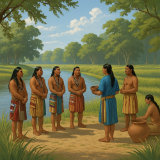
In the early 1800s, tens of thousands of Cherokee, Chickasaw, Choctaw, Creek (Muscogee), and Seminole people lived in the Southeast. These were not small groups, but large nations with their own communities and traditions.
If tens of thousands of people lived across the Southeast in these nations, what might that suggest about their societies?
When reviewing this question with students, guide the conversation toward the idea that large populations typically indicate strength and complexity by asking: If tens of thousands of people lived in these nations, what does that suggest about how their societies were organized? Then ask: What kinds of systems or resources would a society need to support such large populations? Highlight responses that answer that feeding so many people would require farming and food production, that housing would be organized into towns or villages, and that traditions and languages would have connected people across wide areas. Without confirming specific details yet, help students see that the size of these populations suggests these were established, strong, and complex societies. Keep the discussion open-ended and focused on generating ideas rather than settling on final answers.
In this experience, you will learn about the Cherokee, Chickasaw, Choctaw, Creek (Muscogee), and Seminole Nations. You’ll explore what these nations shared, what made each unique, and how they built and organized their communities. You’ll also investigate how they made important decisions about their lands, governments, and cultures as the United States expanded into their homelands.
Objectives: