Add a Curriculum Bundle to Your Account!
Please select a bundle.




The Pack contains associated resources for the learning experience, typically in the form of articles and videos. There is a teacher Pack (with only teacher information) and a student Pack (which contains only student information). As a teacher, you can toggle between both to see everything.
Here are the teacher pack items for The Indian Removal Act:

Overview In this experience, students investigate how the Indian Removal Act and court rulings shaped U.S. policy toward Indigenous nations. First, they analyze a map to consider pressures on Indigenous land during Jackson’s presidency and generate questions about removal. Next, students study the causes and terms of the Indian Removal Act and examine Cherokee resistance through two major Supreme Court cases, Cherokee Nation v. Georgia and Worcester v. Georgia. Then, students connect these cases to Johnson v. M’Intosh and the Doctrine of Discovery to see how earlier European ideas about land ownership influenced U.S. law. Finally, the Elaborate scene invites students to evaluate President Jackson’s address to the Cherokee, analyzing how his combination of promises, warnings, and threats revealed the limits on Indigenous rights in the 1830s. Estimated Duration: 45–60 minutes Vocabulary: Objectives:
Maps can tell powerful stories about movement and change over time. Study this one to uncover what it reveals about U.S. history in the 1830s.
Evaluate the map by following these steps:

This map activity is designed to guide students in surfacing prior knowledge and raising meaningful questions. You will likely have students circling, labeling, and placing question marks on many different parts of the image. That is ok. The goal is to surface thinking, not have a right answer. As students share what they identified on the map, draw attention to the range of features they noticed by asking: What features of the map stood out to you the most, and why? When students share their connections, ask: How does this map connect to what you already know about Andrew Jackson's presidency? Note both accurate understandings and areas that may need revisiting later. As students share their questions, ask: What questions does this map raise about movement, boundaries, or the role of the government? Use students' responses to help the class begin to see the larger tensions of this period. This prepares students for the introduction of the Indian Removal Act in the next scene.
In this experience, you will learn why the Indian Removal Act was created, what its main terms required, and how legal traditions shaped Indigenous rights during the Jackson era.
Objectives:
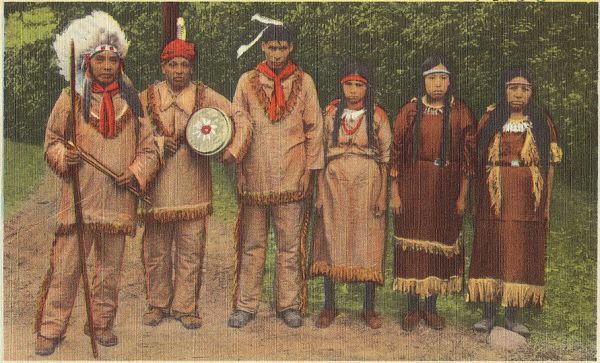
A group of Cherokee prepares for a ceremonial dance in North Carolina