Add a Curriculum Bundle to Your Account!
Please select a bundle.





The Pack contains associated resources for the learning experience, typically in the form of articles and videos. There is a teacher Pack (with only teacher information) and a student Pack (which contains only student information). As a teacher, you can toggle between both to see everything.
Here are the teacher pack items for States' Rights and the Nullification Crisis:


Overview In this experience, students explore how the Nullification Crisis tested the balance of power between states and the federal government. First, they share their views on whether states should be able to cancel national laws, sparking a discussion that mirrors the debates of the 1830s. Next, students analyze the impact of tariffs on different regions and examine how the idea of nullification challenged federal authority. Then, students investigate the responses of Andrew Jackson and Henry Clay to see how force and compromise were both used to preserve the Union. Finally, the Elaborate scene invites students to analyze primary sources from Calhoun, Jackson, and Clay to evaluate how leaders argued over authority and sought to resolve the crisis. Estimated Duration: 45–60 minutes Vocabulary Words and Definitions Objectives:
Be sure to review the term nullify with students before starting this scene. A solid understanding of this word is essential for making sense of the historical conflicts they will encounter. Since the experience focuses on whether states could cancel federal laws, students need to have this concept clear in order to meet the objectives of the experience.
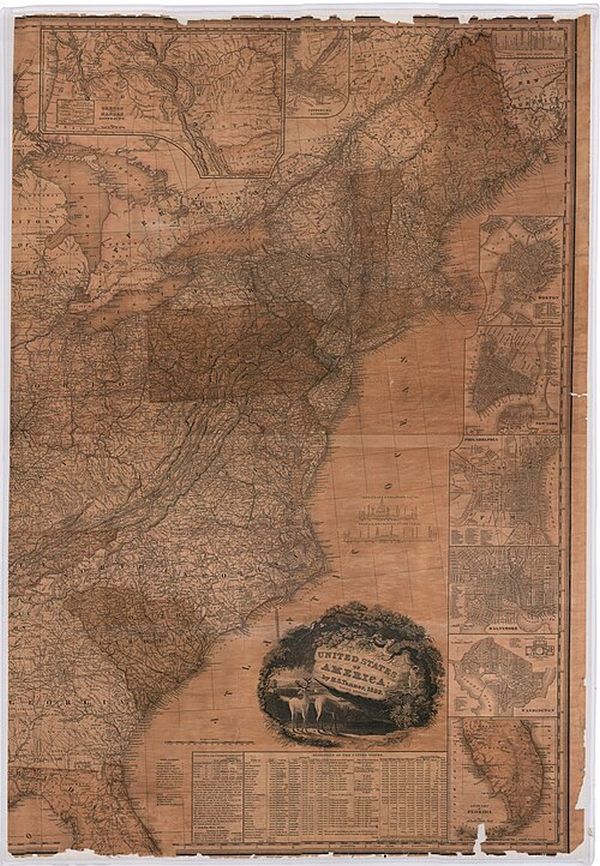
Map of the United States in 1832
In the early 1800s, the United States was still shaping its identity as a nation. The Constitution created a strong federal government, but many people continued to believe that states should hold significant power. Disagreements grew when the federal government passed laws that some states believed were harmful to their economies or unfair to their citizens. These conflicts raised questions about the limits of federal authority and whether states had the right to reject or cancel national laws. Such debates revealed deep divisions over how power should be balanced between the federal government and the states.
Think about the rights states have in relation to federal laws. Then, answer the discussion question.Should a state be allowed to cancel (nullify) a federal law if it believes the law is harmful or unfair to the state’s own people? Why or why not?
After students respond to the discussion wall, take a few moments to highlight a range of answers. Point out differences. For example, some students may argue that states should protect their own people by rejecting harmful laws, while others may stress that federal laws need to apply equally everywhere. This is also a good opportunity to reintroduce the term federalism, reminding students that it describes the system of shared power between state governments and the federal government. Ask: How do your answers to this question connect to the idea of federalism? Highlight answers that explain that federalism requires power to be shared between the national and state governments, which can lead to disagreements over who has the final authority.
Consider returning to the question before the Evaluate scene to have students share whether their answer has changed, and have them explain why.
In this experience, you will learn how disputes over tariffs turned into a broader conflict about the balance of power between states and the federal government, and how the responses of national leaders during the Nullification Crisis showed the difficulty of maintaining that balance.
Objectives: