Add a Curriculum Bundle to Your Account!
Please select a bundle.




The Pack contains associated resources for the learning experience, typically in the form of articles and videos. There is a teacher Pack (with only teacher information) and a student Pack (which contains only student information). As a teacher, you can toggle between both to see everything.
Here are the teacher pack items for The Second National Bank Crisis:

Overview In this experience, students investigate how Andrew Jackson’s Bank War shaped American society and the economy. First, they reflect on why people’s trust in banks is important and consider what happens when that trust is lost. Next, students analyze Jackson’s decision to veto the renewal of the Bank’s charter and evaluate his reasons for opposing it. Then, students examine the short-term and long-term impacts of the Bank War, including the ways different groups, such as farmers, merchants, and workers, were affected. Finally, the Elaborate scene invites students to connect these impacts to the Flour Riot of 1837 and interpret how the anger over rising prices revealed the hardships ordinary Americans faced during the Panic of 1837. Estimated Duration: 45–60 minutes Vocabulary Words and Definitions Objectives:
Note that the word negate is essential for discussions in the experience, and the discussions are necessary for students to meet the third objective. As you move through the experience, encourage students to use the term directly in their responses so they practice applying it in historical and analytical contexts.
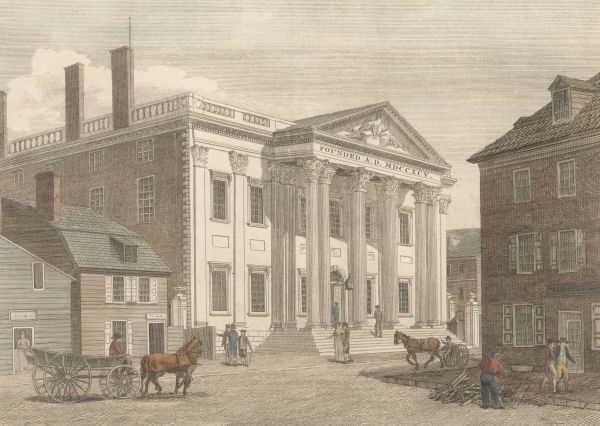
First Bank of the United States in Philadelphia, Pennsylvania, in 1799
Banks are an important part of most communities in the United States. People use banks for different financial needs, including depositing money, taking loans, and investing.
Think about the role banks play in people’s lives. Then, answer the discussion questions.Why is it important for people to trust the banks where they deposit their money?
What might happen if large numbers of people lost trust in the banks they used to protect their money?
After students respond, guide the conversation toward the idea that banks depend on public trust to function. Emphasize that deposits are not simply stored away but are used in ways that connect to the larger economy. Ask: When confidence in banks is questioned, how do you think can it affect both individuals and communities? Encourage students to compare their ideas in the discussion walls, highlight connections between responses, and consider how the questions build on one another. The first invites students to think about why trust is necessary, while the second pushes them to extend their thinking to the possible outcomes if that trust breaks down. This reflection helps students see the broader role banks play in society and prepares them to explore the impacts of the Bank Crisis in later scenes.
In this experience, you will learn how Andrew Jackson’s battle with the Bank of the United States sparked conflict over money and power, shaping the lives of everyday people and the future of the nation’s economy.
Objectives: