Add a Curriculum Bundle to Your Account!
Please select a bundle.




The Pack contains associated resources for the learning experience, typically in the form of articles and videos. There is a teacher Pack (with only teacher information) and a student Pack (which contains only student information). As a teacher, you can toggle between both to see everything.
Here are the teacher pack items for The Rise of Jackson:


Overview In this experience, students analyze Andrew Jackson’s rise to power and the early years of his presidency to evaluate how his promises to represent the “common man” shaped American politics. First, they reflect on what people hoped to gain by electing Jackson in 1828. Next, students investigate how Jackson’s life story, leadership qualities, and ideas about government influenced public support and led to the rise of the Democratic Party and its opposition, the Whigs. Then, students examine a timeline of Jackson’s early presidency to determine which actions upheld or went against his populist platform. Finally, the Elaborate scene invites students to evaluate a political cartoon made years later that criticized the spoils system, considering how Jackson’s early policies were remembered and debated over time. Estimated Duration: 45–60 minutes Vocabulary Words and Definitions Objectives:
Students will work in small groups in the Explain scene. Consider previewing the timeline and the activity to inform grouping.
Before beginning this experience, consider reviewing the term cabinet. Understanding that a cabinet is a group of advisors who help the president make decisions will help students better understand Jackson's "Kitchen Cabinet" and why it became a significant part of his presidency.
The 1820s were a time of political change in the United States. New leaders rose to prominence, and Americans began to debate what kind of person should guide the nation. Andrew Jackson became a central figure in this period, and his rise brought both excitement and controversy.
Consider what hopes Americans placed in Jackson’s presidency, and then answer the discussion question to explain how those hopes influenced expectations for his leadership.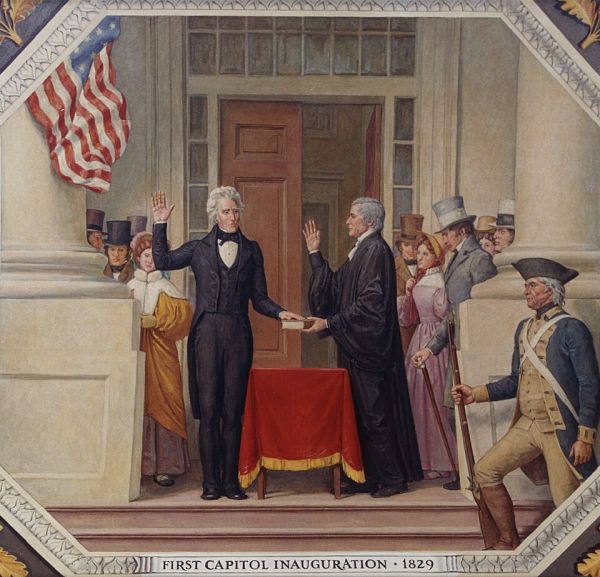
Andrew Jackson’s first inauguration as president
What did people hope to gain by electing Andrew Jackson in 1828?
This Engage scene spirals the learning from the first experience in the unit. It acts as a review while also getting students ready to consider what people hoped for with Jackson’s election because of what he promised, and the reality of his presidential actions. As students share their ideas, guide the conversation toward the kinds of hopes people had for what Jackson would do as president. Ask: What expectations do you think voters had for Andrew Jackson once he became president? Why do you think that? Encourage students to explain why Americans might have wanted those things from a leader, and to make predictions about how Jackson might try to fulfill his promises.
In this experience, you will learn how Andrew Jackson’s rise to power affected American politics and how his actions as president compared to the promises he made to the people.
Objectives: