Add a Curriculum Bundle to Your Account!
Please select a bundle.




The Pack contains associated resources for the learning experience, typically in the form of articles and videos. There is a teacher Pack (with only teacher information) and a student Pack (which contains only student information). As a teacher, you can toggle between both to see everything.
Here are the teacher pack items for An Era of Reform:

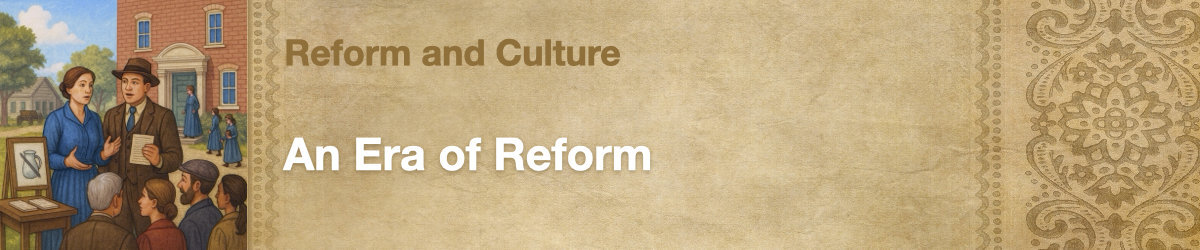
Overview In this experience, students explore the beliefs and ideas that led many Americans in the early 1800s to call for reform. First, students examine social, economic, and moral problems created by industrialization, urban growth, and changing values to understand why many Americans believed their society needed improvement. Next, they predict how people during this time might have tried to solve these problems, connecting their ideas to themes of responsibility and community. Then, students learn about Transcendentalism and analyze an excerpt from Henry David Thoreau’s Civil Disobedience to explore how ideas about self-reliance, conscience, and moral duty shaped reform thinking. Finally, the Elaborate scene invites students to read an adapted excerpt from Margaret Fuller’s Woman in the Nineteenth Century to identify the problems she described for women and consider how her ideas reflected growing calls for equality and change during the First Age of Reform. Estimated Duration: 45–60 minutes Vocabulary: Objectives:
Before beginning the experience, review the terms revival, abolitionist, and state (as in a sovereign entity). Students have seen these ideas before, and revisiting them will support their understanding of the reform movements they encounter in this experience. A quick check for meaning helps ensure students can draw on familiar concepts as they make sense of new content.
In the Explain scene, students will move between independent work and small-group collaboration as they analyze Transcendentalist ideas and examine Thoreau’s argument in Civil Disobedience. They will first complete multiple-choice questions on their own, then work together to interpret key concepts, and finally return to independent reflection in the discussion wall. To facilitate smooth transitions, briefly name the goal of each phase so students understand why their thinking moves from independent to shared and back again. Consider previewing the reading and concept map activity to inform grouping.
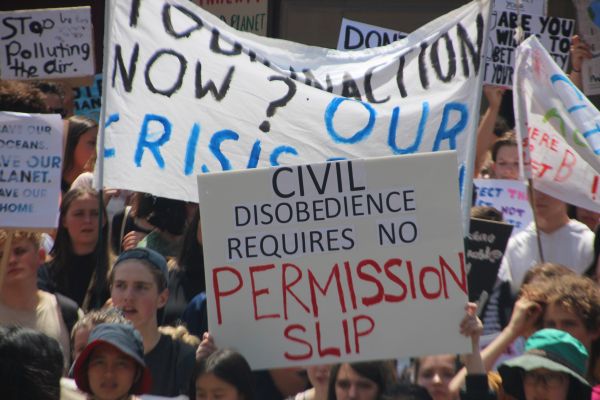
People gather at a peaceful protest
People often think rules or laws they must follow are unfair, and communities have long debated the best ways to respond. Understanding how people choose to act when they disagree with authority can help explain many moments in history.
With your group, discuss the meanings of the words civil and disobedience. Consider how the words might relate to each other. Then record your group’s definitions for both terms in the chart below.Write the definitions for both words in the chart.

After groups finish defining civil and disobedience, review their responses to ensure students understand both words. Highlight examples showing that civil can mean relating to citizens or people and can also describe actions that are peaceful or nonviolent. Clarify that disobedience means refusing to follow rules or laws. Help students understand how the two words relate by asking: How might these two words connect? Then, have students define civil disobedience. Ask: Based on the definitions of the two words separately, what is the definition of civil disobedience? Together, create a class definition for civil disobedience and record it on chart paper or the whiteboard. Compare it to the definition provided in the experience and consider keeping it visible for the remainder of the experience or hanging it in the classroom for the rest of the unit.
In this experience, you will learn how concerns about unfair treatment, growing economic challenges, and new ideas about individual conscience inspired many Americans to search for ways to improve their society in the early 1800s.
Objectives: