Add a Curriculum Bundle to Your Account!
Please select a bundle.




The Pack contains associated resources for the learning experience, typically in the form of articles and videos. There is a teacher Pack (with only teacher information) and a student Pack (which contains only student information). As a teacher, you can toggle between both to see everything.
Here are the teacher pack items for The Women’s Rights Movements:

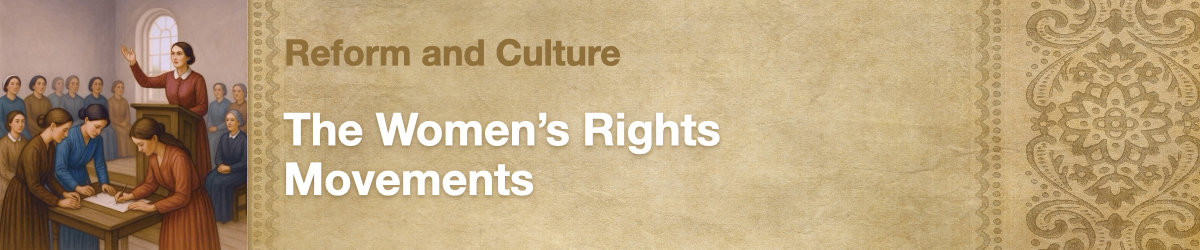
Overview In this experience, students explore how women in the early 1800s began organizing for equal rights during the First Age of Reform. First, they think about what they have learned so far about the First Age of Reform and share words that connect to the movement. Next, they examine the early limits on women’s citizenship and discuss the debates and resolutions of the Seneca Falls Convention. Then, students trace how women’s activism evolved across the mid-1800s by connecting key reformers and events on a timeline. Finally, the Elaborate scene invites students to study Sojourner Truth’s speech “Ain’t I a Woman?” to evaluate how the fight for women’s rights intersected with the abolition movement and expanded the call for equality in America. Estimated Duration: 45–60 minutes Vocabulary Words and Definitions Objectives:
Before beginning the experience, consider checking that students are familiar with the term suffrage, which they learned in prior units. Establishing this understanding will help them make sense of the ideas and debates they will encounter in the experience.
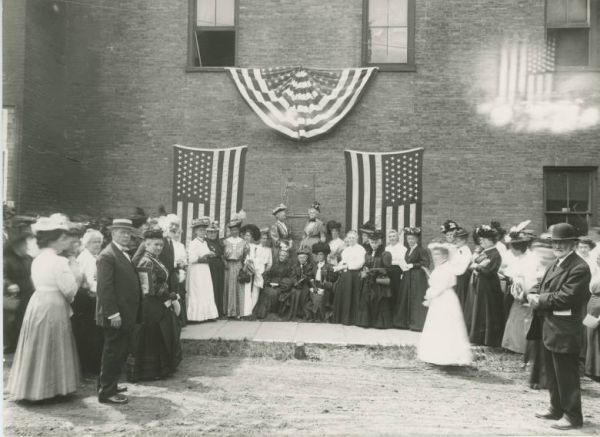
Celebration of the 60th anniversary of the 1848 Seneca Falls Convention
During the mid-1800s, the United States was undergoing many changes. Think about what you have learned so far about the First Age of Reform. Contribute to the word wall to share your ideas.
Choose one word that captures what stands out to you most about the First Age of Reform, and add your word to the class word wall.
When reviewing the word wall, guide a discussion that draws connections between their choices and the broader goals of the Age of Reform. Ask: What do your words show about the kinds of problems reformers were trying to solve? Encourage students to notice themes such as fairness, equality, opportunity, or change. Then, connect to prior learning by asking: What do we already know about how women have participated in reform movements so far? Listen for examples like temperance reformers, Dorothea Dix’s work to improve prisons and asylums, or women’s involvement in abolition. Use their responses to highlight how women were already taking active roles in solving problems, setting the stage for the next scene’s focus on their efforts to claim equal rights for themselves.
In this experience, you will learn how women pushed for greater rights and opportunities in the mid-1800s by challenging limits on their citizenship, leading movements for change, and shaping American society through their activism.
Objectives: