Add a Curriculum Bundle to Your Account!
Please select a bundle.


The Pack contains associated resources for the learning experience, typically in the form of articles and videos. There is a teacher Pack (with only teacher information) and a student Pack (which contains only student information). As a teacher, you can toggle between both to see everything.
Here are the teacher pack items for The Underground Railroad:


Overview In this experience, students investigate how the Underground Railroad operated and what it reveals about the dangers enslaved people faced and the courageous actions many took to seek freedom. First, students activate their background knowledge by predicting challenges freedom seekers might have encountered. Next, they deepen their understanding of how the Underground Railroad worked, including the roles of conductors, safe houses, and secret communication. Then, students analyze a reward poster and examine primary source images to explore how economics, danger, and resistance shaped both escape attempts and the efforts of those who tried to stop them. They also identify problems people faced on escape routes and the solutions individuals and networks used to survive. Finally, the Elaborate scene invites students to consider Harriet Tubman’s role in the Underground Railroad and explain how her actions contributed to the goals of the abolitionist movement. Estimated Duration: 45–60 minutes Vocabulary Words and Definitions: Objectives:
Students learned the terms Underground Railroad and safe houses in the Abolition Movement experience. Consider reviewing these terms before beginning this experience, since grounding students in familiar language can help them recognize how the networks, roles, and strategies they encounter here connect to ideas they have already explored.
The term freedom seeker is used throughout the experience to center the agency, courage, and decision-making of enslaved people who fled enslavement. This wording contrasts with labels like fugitive, which reflect the perspective of enslavers rather than the lived experiences or goals of those seeking freedom. You may consider discussing with students how using the different terms can impact the way we understand those who sought freedom during this time.
In the Explain scene, students will work together to evaluate a historical reward poster alongside additional primary source images connected to the Underground Railroad. Because these tasks invite close reading, discussion, and interpretation, you may wish to look ahead at the activity to inform grouping. Considering the kinds of conversations and collaborative analysis students will engage in can help ensure groups are prepared to navigate the emotional weight and historical complexity of the sources.
This experience does not include optional or skippable scenes, as each section builds toward a complete understanding of the Underground Railroad as a network, its relationship to abolition, and Harriet Tubman’s leadership, all of which are covered in the Evaluate scene. The sequence is designed to help students develop a connected picture of resistance, collaboration, and historical impact.
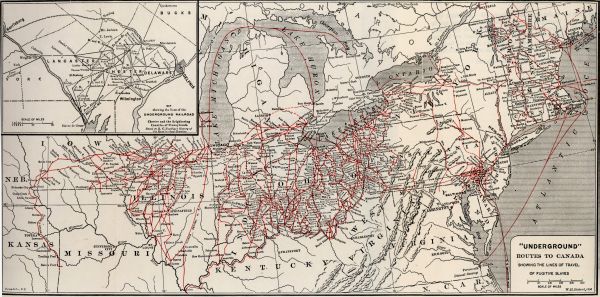
Map of the north-bound routes of the Underground Railroad
Enslaved people in the United States faced harsh conditions that limited their freedom and controlled many parts of their lives. Efforts to escape created networks of support that aimed to help individuals move toward places where slavery was not allowed, called the Underground Railroad.
Consider the challenges people faced under this system and how it shaped the choices individuals might have made. Then, add an idea to the class chart.What challenges do you think those escaping slavery on the Underground Railroad faced on their journey to freedom? Add one idea to the chart. Try not to repeat ideas.

If students struggle to generate ideas, encourage them to reference the map for additional context. They might examine the terrain, distances, waterways, or other geographic features that freedom seekers would have had to navigate. Pointing students toward the landscape can help them move beyond only thinking about being forced back into slavery and broaden their understanding of the factors that shaped these journeys.
After students add their ideas to the class chart, guide them to notice patterns in their predictions and to explain why they think those challenges mattered for people attempting escape. If students focused mostly on being caught or chased, help broaden their thinking. Ask: What challenges might come from the geography they had to cross? If students overlooked navigation, help them consider direction and distance by asking: What challenges might come from trying to travel without clear tools or guidance? If students did not mention basic needs, help them think about survival by asking: What challenges might come from not having enough food, clothing, or shelter on the journey? To extend their reasoning even further, ask: How might these different kinds of challenges have shaped the choices people made as they planned their escape?
In this experience, you will learn how the Underground Railroad worked as a secret network of resistance, how people took risks to support freedom seekers, and how these efforts shaped the larger movement to end slavery.
Objectives: