Add a Curriculum Bundle to Your Account!
Please select a bundle.




The Pack contains associated resources for the learning experience, typically in the form of articles and videos. There is a teacher Pack (with only teacher information) and a student Pack (which contains only student information). As a teacher, you can toggle between both to see everything.
Here are the teacher pack items for Eastern Europe: Society and Culture:

Overview In this experience, students examine folk dance as a form of cultural expression and consider how traditions can preserve cultural identity while also reflecting cultural diffusion. They then explore several examples from Eastern Europe before working in groups to research the culture of one Eastern European country through markers such as food, celebrations, religion, the arts, ethnic and cultural groups, and recreation. Finally, students synthesize their research to explain how history, migration, religion, geography, and cultural diffusion have helped shape the country’s culture. In scene 3, students will work in small groups. You will assign each group one of seven countries for research, so try to have at least seven groups. Note that there is no traditional quiz at the end of this experience. Instead, students demonstrate their understanding through the extended writing task in Scene 4. Use the Scene 4 response as the primary opportunity to assess whether students can synthesize ideas from across the lesson rather than recall isolated facts. Students should use specific cultural examples to explain how history, migration, religion, geography, and cultural diffusion have shaped the Eastern European country they researched. Look for accurate use of evidence, clear connections between cultural markers and the forces that shaped them, and recognition that cultures develop and change over time. Objective:
Eastern Europe is home to many different languages, religions, traditions, artistic styles, and ways of life. These cultural patterns have been shaped over time by geography, migration, trade, religion, shifting borders, empires, and political change.
Because people and ideas have moved across the region for centuries, Eastern European societies share some cultural connections while also maintaining important differences among countries and communities. Music, art, architecture, religious traditions, food, celebrations, and daily customs can all reveal how history and culture continue to influence life today.
In this experience, you will explore examples of society and culture across Eastern Europe and examine how historical events, migration, religion, and cultural diffusion have helped shape the region.
Objective:
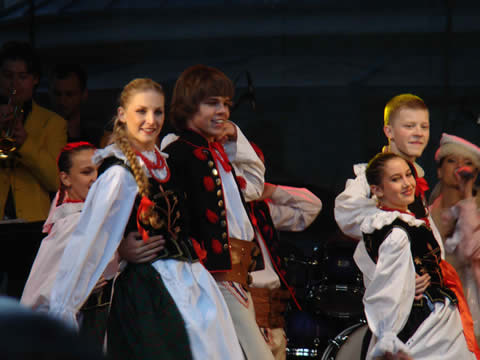
Polish Polka Dance Troupe
Cultural traditions can be expressed through music, dance, clothing, celebrations, art, and other shared practices. These traditions can reflect a society’s history, values, beliefs, and interactions with other cultures.
Watch Bulgarian Folk Dance as one example of cultural expression in Eastern Europe. As you watch, pay attention to what the dance reveals about group participation, music, movement, clothing, and tradition.
What cultural markers can you identify in the video, and what might they reveal about Bulgarian culture?
Invite students to share the cultural markers they noticed and ask them to point to specific evidence from the video. Guide the discussion toward features such as music, group dancing, clothing, patterns of movement, and the social nature of the performance. Emphasize that one folk dance is only one example of Bulgarian culture and should not be treated as representative of every person or community in the country. Use the discussion to reinforce that cultural traditions can preserve historical influences and shared practices over time. Ask students to consider how music, dance, and clothing can communicate cultural identity without using written language. Possible follow-up questions include:
When everyone is ready to continue, unlock the next scene.


