Add a Curriculum Bundle to Your Account!
Please select a bundle.



The Pack contains associated resources for the learning experience, typically in the form of articles and videos. There is a teacher Pack (with only teacher information) and a student Pack (which contains only student information). As a teacher, you can toggle between both to see everything.
Here are the teacher pack items for Southern Europe: Society and Culture:

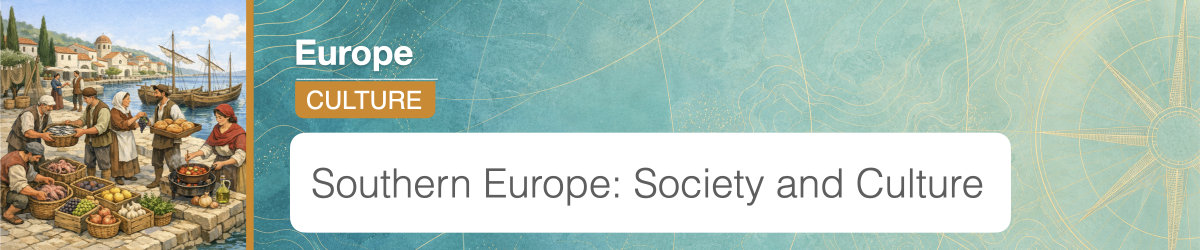
Overview In this experience, students examine how geography, history, trade, migration, and cultural diffusion have shaped food traditions across the Mediterranean region. They compare shared ingredients and regional differences in Mediterranean cuisine, then research broader cultural markers in Greece, Italy, or Spain, including food, religion and celebrations, art and architecture, sports and recreation, and daily customs. Finally, students synthesize their research to explain how history, geography, and cultural diffusion continue to shape the culture of a Southern European country today. Objectives:
Food can tell us a great deal about a society. The ingredients people use, the dishes they prepare, and the traditions connected to meals can reflect geography, history, religion, trade, migration, and family or community customs.
Southern Europe has many different food traditions, and cuisine varies among countries and even among regions within the same country. Coastal areas, mountain regions, farming areas, and major cities may all develop different foods and ways of preparing them.
In this experience, you will explore the food cultures of Southern Europe and examine how geography, history, trade, and migration have influenced foods and cultural traditions across the region.
Objectives:
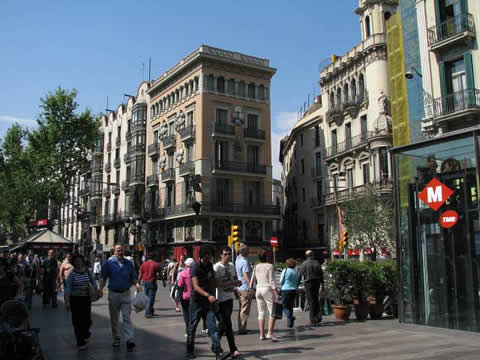
La Rambla, Barcelona, Spain
Read the following quote about culture:
Culture and history plunge directly into things, into stones, into wrinkles on human faces, in the taste of wine and oil, into the colour of waves.
–Claudio Magris, Italian Author
What do you think the author means that culture and history “plunge into things”?
As a class, discuss your ideas. In what ways do you think culture and history “plunge into things” in your own culture? How do they connect to physical things and habits?
Guide students to discuss the way that culture and history connect people to their past and present.
When everyone is ready to continue, unlock the next scene.


