Add a Curriculum Bundle to Your Account!
Please select a bundle.



The Pack contains associated resources for the learning experience, typically in the form of articles and videos. There is a teacher Pack (with only teacher information) and a student Pack (which contains only student information). As a teacher, you can toggle between both to see everything.
Here are the teacher pack items for Western Europe: Society and Culture:

Overview In this experience, students explore the elements that make up culture and examine how those elements are expressed in France. They then work in groups to research the culture of another Western European country, focusing on features such as food, architecture, art, literature, sports, and traditions. Finally, students synthesize what they learned to explain how Western Europe can be culturally connected as a region while its individual countries remain distinct. In scene 3, students will work in small groups. You will assign each group one of eight countries for research, so try to have at least eight groups. If you plan to teach the experience Western Europe: Government and Economy, you may want to assign students to the same small groups and the same country in order to give them a deeper familiarity with it. Objective:
Western Europe includes countries with distinct languages, histories, traditions, and cultural practices. At the same time, centuries of trade, migration, religion, political change, and interaction have created connections across the region.
Culture can be seen in many parts of daily life, including language, religion, food, music, art, celebrations, recreation, family life, and social customs. These patterns can vary not only from country to country, but also among regions and communities within the same country.
In this experience, you will explore examples of society and culture in Western Europe and examine both the characteristics that connect the region and the differences that make its countries and communities distinct.
Objective:
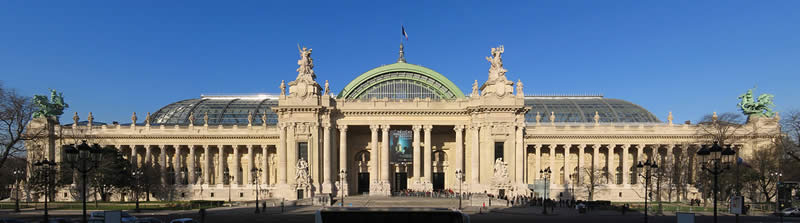
The Grand Palace in Paris, France
What parts of everyday life can tell you something about a society’s culture? List several examples.
Discuss student responses and group their examples into broad cultural categories such as language, religion, food, music, art, celebrations, sports, family traditions, and social customs. Emphasize that culture includes both visible features, such as food or clothing, and less visible features, such as beliefs, values, traditions, and ways people interact. Point out that no single custom represents an entire country and that cultural practices can vary among regions, communities, families, and individuals. Use the discussion to introduce the lesson focus: students will examine examples of culture across Western Europe and look for both shared patterns and important differences. Possible follow-up questions include:
When everyone is ready to continue, unlock the next scene.


