Add a Curriculum Bundle to Your Account!
Please select a bundle.


The Pack contains associated resources for the learning experience, typically in the form of articles and videos. There is a teacher Pack (with only teacher information) and a student Pack (which contains only student information). As a teacher, you can toggle between both to see everything.
Here are the teacher pack items for Mexico: Geographic Passport:


Overview In this experience, students are introduced to the physical geography of Mexico. They create a geographic passport of the country. Then they focus on some of the features of the country that are threatened by human influence on the environment. Students then pick one of these features that they think is important and explain why. Students should work in four small groups in scene 4. Each group will examine one of four different environmental issues. Objectives:
Mexico has a long history shaped by many peoples and cultures. Long before Mexico became a modern country, civilizations including the Olmec, Maya, Zapotec, and Mexica, often called the Aztec, developed cities, governments, trade networks, and traditions in different parts of the region. Indigenous peoples and languages continue to be an important part of Mexico today.
Mexico is also one of the most populous countries in the Americas and has more Spanish speakers than any other country in the world. Its geography includes mountains, plateaus, deserts, tropical forests, long coastlines, and other physical features that influence where and how people live.
In this experience, you will explore the physical and human geography of Mexico and examine some of the features that make different parts of the country distinct.
Objectives:
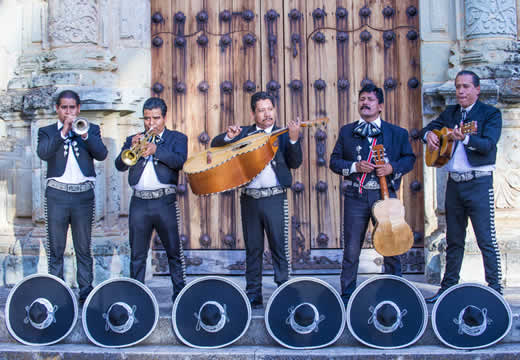
Day of the Dead Carnival in Mexico
What kind of land or climate do you think you might find in different parts of Mexico? To list more than one separate the words with a comma like this: cat, dog.
Invite students to share what they already know about Mexico, including its geography, food, music, celebrations, or other aspects of life and culture. Some students may have personal or family connections to Mexico and may choose to share those experiences. Emphasize that students are not expected to speak for a culture or country based on their background. Use the discussion to surface prior knowledge, questions, and ideas that students can revisit as they learn more about Mexico’s geography.
When everyone is ready to continue, unlock the next scene.


