Add a Curriculum Bundle to Your Account!
Please select a bundle.


The Pack contains associated resources for the learning experience, typically in the form of articles and videos. There is a teacher Pack (with only teacher information) and a student Pack (which contains only student information). As a teacher, you can toggle between both to see everything.
Here are the teacher pack items for North Africa: Society and Culture:

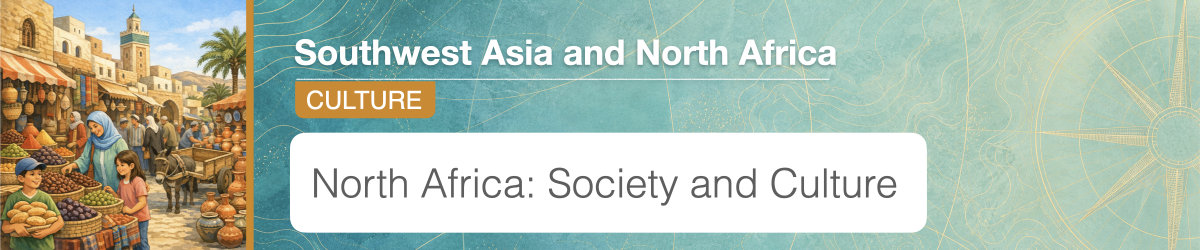
Overview In this experience, students explore the range of cultures found across North Africa and research the cultural features of one country or territory. They then examine contemporary life in the region, including differences in urban and rural experiences and changing social roles. Finally, students analyze factors that can affect access to education, including gender, income, and location, and consider how education can shape individual opportunities and social change. Objectives:
North Africa is home to many societies and cultural traditions shaped by history, religion, language, family life, art, and everyday customs. Although countries in the region share some cultural influences, each has its own traditions and social patterns.
In this experience, you will examine different aspects of society and culture across North Africa, including the lives, opportunities, and challenges of young people in the region.
Objectives:
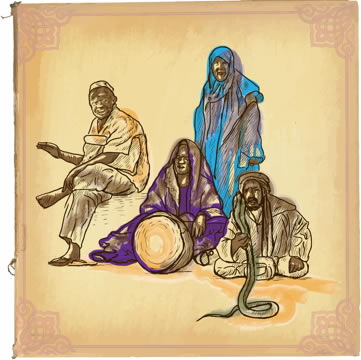
Culture can be seen in many parts of everyday life, including language, religion, clothing, food, music, architecture, traditions, and community activities.
Watch the video Destination: North Africa. As you watch, identify cultural markers you notice and record examples that show how people across North Africa express culture in everyday life.
What cultural markers did you notice in the video about North Africa?
After students respond, invite several students to share one cultural marker they identified and explain what they think it reveals. Record examples from different categories, such as language, religion, clothing, food, music, architecture, traditions, or community life. Use the discussion to reinforce that a cultural marker is evidence of culture, but one example does not represent every person in a country or across North Africa. Encourage students to notice both shared influences and differences across the region. Possible follow-up questions include:
When everyone is ready to continue, unlock the next scene.


