Add a Curriculum Bundle to Your Account!
Please select a bundle.


The Pack contains associated resources for the learning experience, typically in the form of articles and videos. There is a teacher Pack (with only teacher information) and a student Pack (which contains only student information). As a teacher, you can toggle between both to see everything.
Here are the teacher pack items for Turkey to Afghanistan: Society and Culture:

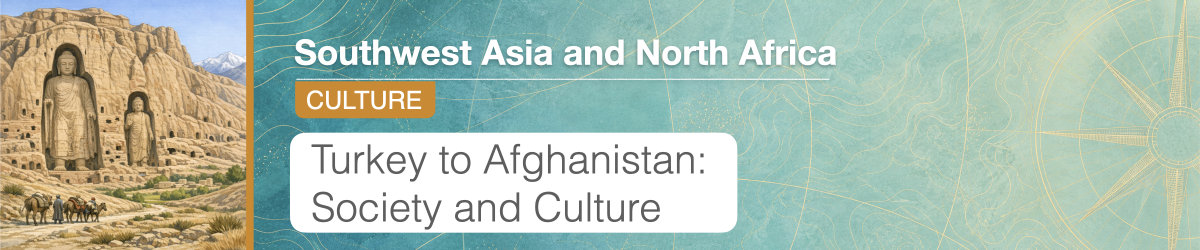
Overview: In this experience, students examine how buildings and landmarks can preserve evidence of a society’s beliefs, traditions, history, and cultural change. They investigate the Bamiyan Buddhas in Afghanistan and the Hagia Sophia in Turkey to compare different ways cultural landmarks can be destroyed, preserved, changed, and reinterpreted over time. Finally, students apply this understanding by creating a cultural and historical record of a landmark and explaining why it matters to future generations. Objectives:
Buildings and landmarks can be more than useful or beautiful places. Over time, they can become records of the people and societies connected to them. Their architecture, artwork, religious uses, and changes can reveal what people valued, believed, created, and chose to remember.
Some landmarks remain important long after the people who first created them are gone. Later generations may preserve them, change how they are used, restore them, or sometimes destroy them. Those choices can reveal something about how societies respond to the past.
Think about a building or place that is important to you, your family, or your community. Its importance may come from what happened there, what it represents, or the memories and traditions connected to it.
In this experience, you will examine important cultural landmarks in Afghanistan and Turkey to investigate what they reveal about societies over time and why people may choose to preserve, change, or destroy places from the past.
Objectives:
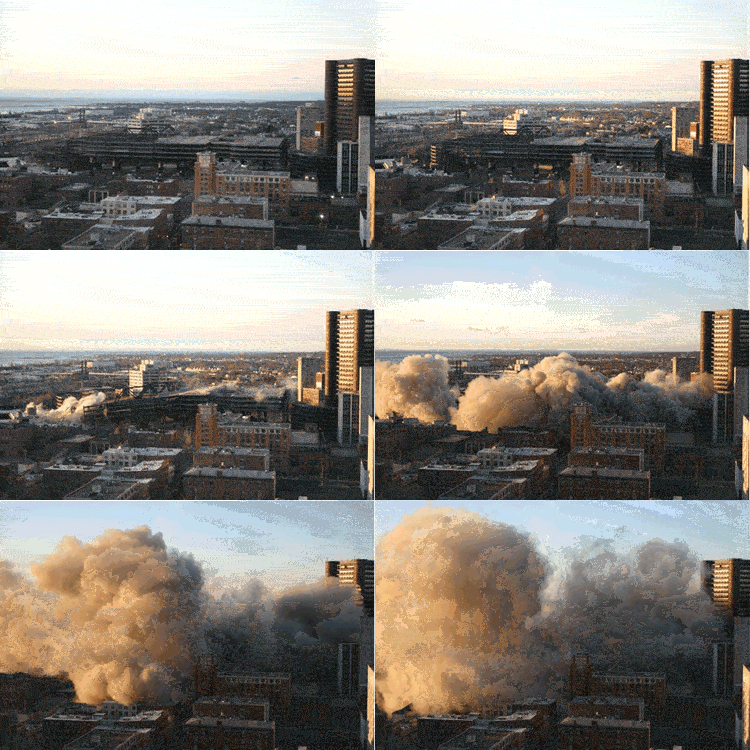
Building demolition
Imagine that a building or place important to your community was going to be destroyed. What might be lost besides the building itself?
After students respond, invite several students to share what they believe could be lost when an important place disappears. Use the discussion to move beyond the physical structure. Students may identify memories, traditions, artwork, architecture, religious meaning, community identity, or evidence about the past. Explain that historians and other researchers often study landmarks as evidence. A building can reveal information about the people who created it, the people who later used it, and the ways a society changed over time. Possible follow-up questions include: That sets up both Bamiyan and Hagia Sophia much better.
When everyone is ready to continue, unlock the next scene.


