Add a Curriculum Bundle to Your Account!
Please select a bundle.



The Pack contains associated resources for the learning experience, typically in the form of articles and videos. There is a teacher Pack (with only teacher information) and a student Pack (which contains only student information). As a teacher, you can toggle between both to see everything.
Here are the teacher pack items for Turkey to Afghanistan: History and Its Influence:

Overview: In this experience, students trace major developments in the histories of Turkey and Afghanistan and compare how each country changed over time. They then examine how geographic location and physical features influenced historical events in both countries. Finally, students research significant turning points in Iran’s history and explain connections between its geography, historical development, and lasting influences. In scenes 2 and 3, students will work in small groups. Objectives:
The history of a place is shaped by the choices people make, but geography can influence the opportunities and challenges they face. Mountains can make movement difficult. Rivers and seas can support travel and trade. A location between major regions can become a meeting place for people, goods, ideas, and political powers.
Turkey, Afghanistan, and Iran have each occupied important positions between larger regions of the world. Over time, trade routes, migrations, empires, invasions, and cultural exchange connected these lands with places far beyond their borders.
The photograph below shows Istanbul, a city in Turkey located along the Bosphorus, a narrow waterway that separates parts of Europe and Asia and connects the Black Sea with waters leading to the Mediterranean.
In this experience, you will examine major developments in the histories of Turkey, Afghanistan, and Iran and investigate how geography helped shape those histories and the influences that remained.
Objectives:
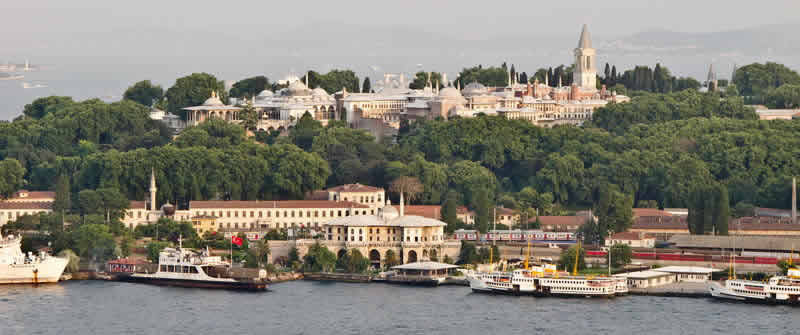
Why might the location of Istanbul have made the city important to different peoples and governments over time? Use evidence from the image and what you know about its location.

After students respond, invite several students to share how Istanbul's location might have created advantages or challenges. Ask them to identify the geographic evidence that supports their ideas. Use the discussion to surface possibilities such as movement between Europe and Asia, access to waterways, trade, transportation, and control of routes between the Black Sea and Mediterranean region. Do not reduce Istanbul's history to geography alone. Reinforce that geography can create opportunities and strategic importance, but people and governments decide how to respond to those conditions. Possible follow-up questions include:
Divide the class into their small groups for scenes 2 and 3. Assign each group a country—either Afghanistan or Turkey. Assign a reporter to upload the result for each group, or tell the students to choose their own reporter.
When everyone is ready to continue, unlock the next scene.


