Add a Curriculum Bundle to Your Account!
Please select a bundle.


The Pack contains associated resources for the learning experience, typically in the form of articles and videos. There is a teacher Pack (with only teacher information) and a student Pack (which contains only student information). As a teacher, you can toggle between both to see everything.
Here are the teacher pack items for Israel and Its Neighbors: Government and Economy:

Overview
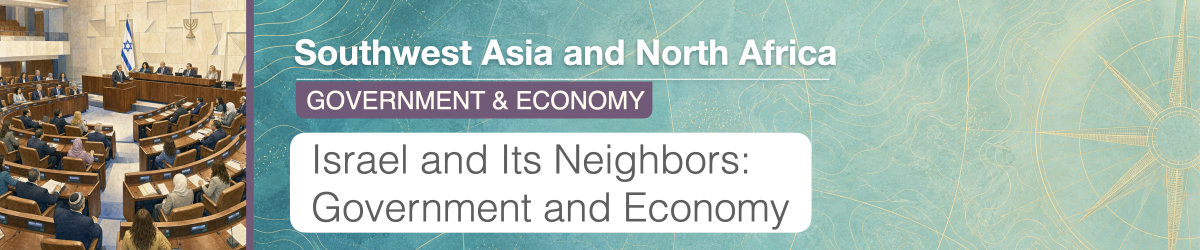
In this experience, students compare how political power is organized in Jordan, Syria, Lebanon, and Israel. They examine Jordan’s constitutional monarchy, Syria’s transitional government, Lebanon’s parliamentary republic and power-sharing system, and Israel’s parliamentary democracy and coalition governments. Through these examples, students consider how leaders are selected, how legislatures are formed, and how government structures can differ across countries in the same region.
Objectives:
Countries need ways to make laws, choose leaders, and decide who has the power to govern. But governments do not organize these responsibilities in the same way. In some countries, a monarch serves as head of state. In others, a president holds that role. Some governments depend on a parliament, while others give greater power to a president. Even countries described as republics can divide political power very differently.
Israel, Jordan, Lebanon, and Syria provide examples of several different government structures. Comparing them can help show that a government’s name does not tell us everything about how it works. To understand a political system, we also need to ask who holds power, how leaders are selected, how laws are made, and what role citizens have in government.
In this experience, you will examine the governments of Israel, Jordan, Lebanon, and Syria and compare structures such as constitutional monarchy, parliamentary democracy, parliamentary republic, presidential government, and coalition government.
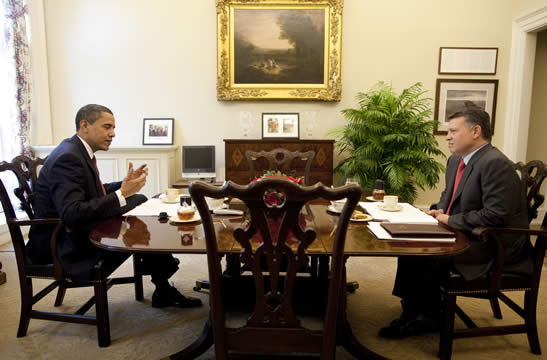
What do you think you would need to know to understand how a country’s government works?
After students respond, invite several students to share what they think someone would need to know in order to understand how a country’s government works. Record a few ideas, but do not confirm or correct them yet. Use the discussion to surface possible categories such as who leads the government, how leaders are chosen, who makes laws, how power is divided, whether citizens vote, and what limits exist on government power. Tell students they will use these kinds of questions as they compare the governments of Israel, Jordan, Lebanon, and Syria. Possible follow-up questions include:


