Add a Curriculum Bundle to Your Account!
Please select a bundle.



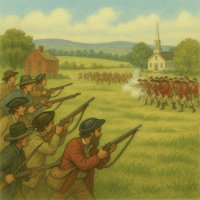

The Pack contains associated resources for the learning experience, typically in the form of articles and videos. There is a teacher Pack (with only teacher information) and a student Pack (which contains only student information). As a teacher, you can toggle between both to see everything.
Here are the teacher pack items for Lexington and Concord:


Overview In this experience, students examine how key events of the Battles of Lexington and Concord are remembered and retold by building a timeline of events and analyzing how different perspectives shape historical stories. First, students consider why people might tell different stories about the same wars and conflicts. Next, students create a timeline of key events leading to, during, and immediately after the Battles of Lexington and Concord. Then, students work in small groups to analyze primary sources to evaluate perspectives from different sides of the battles. Finally, the Elaborate scene invites students to read or listen to the famous poem Paul Revere’s Ride and consider how artistic retellings can shape our understanding of historical events. Estimated Duration: 45–60 minutes Vocabulary: Objectives:
The Explain scene involves small group work. To support the flow of the experience, create groups before beginning the experience. Additionally, consider previewing the reading materials to help you form groups that balance student strengths and support comprehension. Keep in mind that, for the activity to work best, there should be at least five small groups.
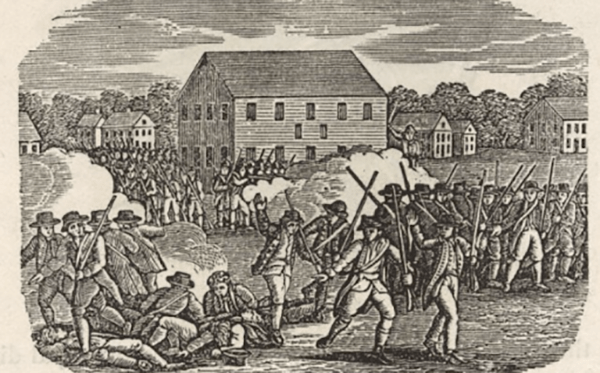
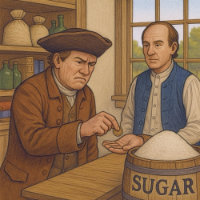
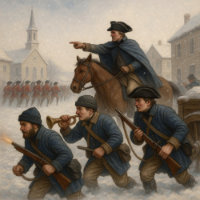
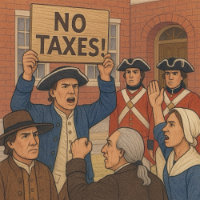
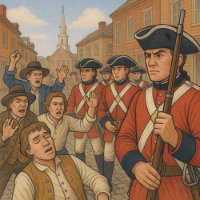
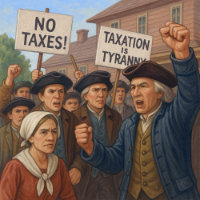
Tensions between the American colonists and Britain had been building for years. Protests, boycotts, and clashes over taxes made both sides increasingly suspicious of one another. These rising tensions finally erupted into fighting in April 1775, when the first battles of the American Revolution took place at Lexington and Concord.
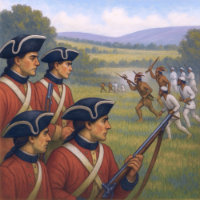
Why might people tell different stories about the same battle or event in a war?
When reviewing the discussion question, use the moment to reinforce why considering multiple perspectives is important in studying history. Ask: Why might people who experience the same event view it differently? Highlight answers that explain that people's perspectives can differ based on their roles, loyalties, or experiences. Highlight that looking at a range of perspectives helps build a fuller and more accurate understanding of what happened.
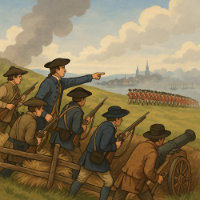
The first official fighting of the American Revolution took place at Lexington and Concord.
In this experience, you will learn about the causes, events, and immediate impacts of these battles, and consider who is at fault for the outbreak of violence.
Objectives: