Add a Curriculum Bundle to Your Account!
Please select a bundle.



The Pack contains associated resources for the learning experience, typically in the form of articles and videos. There is a teacher Pack (with only teacher information) and a student Pack (which contains only student information). As a teacher, you can toggle between both to see everything.
Here are the teacher pack items for Rising Tensions in the Colonies:


Overview In this experience, students analyze how British and colonial actions created a cycle of escalating tensions leading up to the American Revolution. First, students consider how colonists responded to increased British control and predict how both sides might have contributed to growing conflict. Next, students examine a sequence of British trade laws, military enforcement, and colonial protests to understand the cause-and-effect relationship between actions on both sides. Then, students use a graphic organizer to evaluate how British and colonial actions combined to intensify conflict, recognizing that both sides were acting in ways that increased tensions. Finally, the Elaborate scene invites students to explore how the Declaration and Resolves of the First Continental Congress showed the colonies beginning to act together to protect their rights, and discuss how these shared ideas might have made further conflict with Britain more likely. Estimated Duration: 45–60 minutes Vocabulary Words and Definitions Objectives:
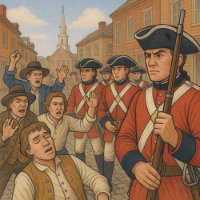
In this experience, students are introduced to the rising tensions between Britain and the colonies, including events such as the Boston Massacre and the Boston Tea Party. These events are mentioned only briefly here, since the next two experiences will give students the chance to take a deeper look. In upcoming experiences, students will analyze primary sources to explore different perspectives on the Boston Massacre and write a claim about responsibility. They will also investigate the causes of the Boston Tea Party and evaluate its effectiveness in advancing the colonial cause. This scene provides important context and builds a foundation for that closer study. Be aware of the amount of additional information you provide students about the Boston Massacre and Tea Party, as it may take away from the investigations in those experiences. It is recommended to preview those experiences before engaging students in this one to ensure you are aware of what they will learn in them.
Colonial resistance to British laws grew steadily through petitions, boycotts, and public protests. These actions revealed deep frustration and increased tension with Britain. As disagreements sharpened, conflict became more challenging to avoid.
Look at the image below. Consider how it might connect to rising tensions in the colonies. Then, share your ideas about the image by contributing to the See-Think-Wonder Chart. Add at least one thing you see in the image, one thing you think about it, and one question you have about it.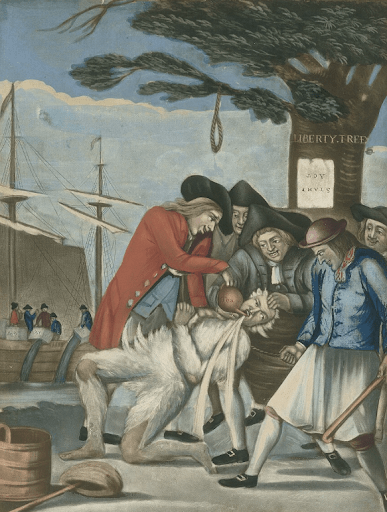
Share your ideas and questions about the image in the See-Think-Wonder Chart.

After students complete the See-Think-Wonder Chart, review their responses as a group. Highlight answers that show careful observation of details, thoughtful connections to the rising tensions between Britain and the colonies, and curiosity through meaningful questions that can guide the next part of the experience. Tell students that this painting, The Bostonians Paying the Excise-Man, or Tarring & Feathering by Philip Dawe, was published in London on October 31, 1774. It shows colonists attacking John Malcom, a British official in Massachusetts whose job was to collect taxes on imported goods, by tarring and feathering him and forcing him to drink tea. Explain that tarring and feathering was a violent protest in which hot tar was poured on a person and feathers were added, leaving the victim hurt and humiliated in public.
In this experience, you will learn how both British leaders and the colonists took actions that changed their relationship. You will see how these actions built on one another and added to the rising tensions that eventually pushed the colonies closer to open conflict.
Objectives: