Add a Curriculum Bundle to Your Account!
Please select a bundle.


The Pack contains associated resources for the learning experience, typically in the form of articles and videos. There is a teacher Pack (with only teacher information) and a student Pack (which contains only student information). As a teacher, you can toggle between both to see everything.
Here are the teacher pack items for The French and Indian War:

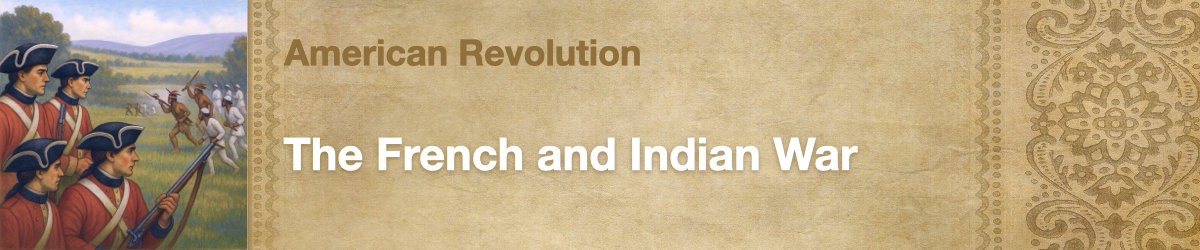
Overview In this experience, students explain how the French and Indian War led to new tensions between Britain and the colonies by identifying causes, effects, and changing perspectives. First, they examine maps to predict why territorial control shifted. Next, they explore the causes of the war and why the conflict broke out. Then, they analyze the outcomes of the war and how British actions affected colonial attitudes. Finally, students are invited to interpret a political cartoon to evaluate how its original message shifted because of the war’s results. Estimated Duration: 45–60 minutes Vocabulary Words and Definitions Objectives:
At the start of this unit, students may notice changes in the way colonial power is named. Early in colonial history, most references were to English colonies. These colonies were established before the 1707 unification of England and Scotland into Great Britain. After this unification, and especially during and after the French and Indian War, the colonies were increasingly referred to as British colonies.
This experience introduces students to both the content and the historical thinking skills that will shape the rest of the unit on the American Revolution. The French and Indian War was a turning point because it changed how Britain viewed its colonies and set in motion the policies that colonists would come to resist. As students engage with this moment, they will also begin developing the historical thinking habits they’ll carry throughout the unit.
By the middle of the 1700s, the relationship between England and its colonies in North America had begun to change. For many years, the colonies had grown and developed while England focused on other priorities. But now, new events and decisions were starting to shift the way the two sides viewed each other.
Look at the maps. Think about what you see, what they make you think, and what questions you have about them. Then, add your ideas to the See-Think-Wonder chart.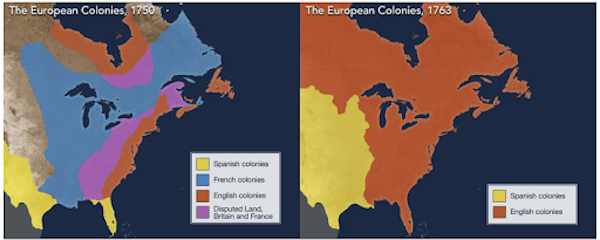
Maps of European Colonies in 1750 and 1763
Look at the maps. Record what you see, what they make you think, and what questions you have about them.

When reviewing the first two columns, guide a discussion about how changes on the maps might reflect changes in relationships and power by asking: What do the differences between these two maps suggest about how the relationship between Britain and its colonies might have begun to change? Encourage students to use specific evidence from the maps to support their thinking and build on one another's observations.
In this lesson, you will learn what caused the French and Indian War and how it affected the relationship between Britain and its colonies in North America. You will explore how this war changed land control, colonial views of Britain, and the way Britain governed the colonies.
Objectives: