Add a Curriculum Bundle to Your Account!
Please select a bundle.




The Pack contains associated resources for the learning experience, typically in the form of articles and videos. There is a teacher Pack (with only teacher information) and a student Pack (which contains only student information). As a teacher, you can toggle between both to see everything.
Here are the teacher pack items for The Second Continental Congress and Independence:


Overview In this experience, students examine the steps taken by colonial leaders toward declaring independence from Britain. First, they review the purpose and accomplishments of the First Continental Congress and reflect on how early leaders responded to growing tensions. Next, students explore the formation of the Second Continental Congress and evaluate its efforts to maintain peace by reading about the Olive Branch Petition. Then, students analyze the factors and key events that contributed to shifting beliefs about independence, including the debates in Congress and the public reactions that followed the Declaration. Finally, the Elaborate scene invites students to take on the role of a delegate and reflect on how it may have felt to weigh these experiences and cast a vote for independence in 1776. Estimated Duration: 45–60 minutes Vocabulary Words and Definitions Objectives:
As you have learned, the First Continental Congress met in 1774. Although the delegates agreed to take collective action, tensions with Britain continued to grow. In 1775, colonial leaders gathered once again at what became known as the Second Continental Congress.
Before you explore what happened at the Second Continental Congress, answer the questions about the First Continental Congress to review why they met and the actions they took.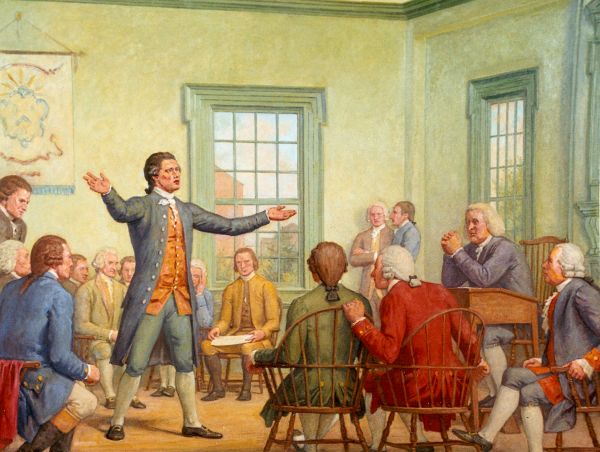
The First Continental Congress (1774)
This review anchors students in a moment when separation from Britain was not yet the goal. The First Continental Congress shows that many colonial leaders still hoped to resolve tensions without breaking away. Use this review to remind students that the idea of independence was not immediate or unanimous. It developed over time as options narrowed and trust collapsed.
In this experience, you will learn how colonial leaders moved from protest to full separation from Britain, and how disagreement gave way to a bold and risky decision.
Objectives: